Cervical Caps and Recurrent UTI Risk

Written and approved by Dr. Jasmine Bonder and Dr. Adam Bonder
Introduction: A Quiet Risk Factor Many Users Never Hear About
If you've chosen a cervical cap for contraception, there's a good chance you did so for thoughtful reasons. Maybe you wanted a non-hormonal option. Maybe you wanted something you could control yourself. Maybe a diaphragm didn't feel right and a cervical cap seemed like a smaller, simpler alternative. These are real, valid reasons.
What many women using cervical caps are never told, however, is that this method comes with a meaningfully higher risk of urinary tract infections, especially when used with spermicide. If you've been experiencing recurrent UTIs alongside cervical cap use, the connection may not be coincidence.
This isn't a guide telling you to abandon a method that works for you. It's a guide giving you clear, honest information so you can make decisions with the full picture. Some women decide to keep their cervical cap and adjust their care. Others decide it's worth exploring alternatives. Both are valid choices, and both deserve to be made with real information.
This article will walk you through what cervical caps are, how they differ from diaphragms, why they're considered a high-risk method for recurrent UTIs, and what your options are. Our goal is to support your autonomy with thoughtful, judgment-free information.

If you'd like a printable companion resource to bring to your next appointment, you can grab our free Clinova UTI and bladder health guide here anytime.
What Is a Cervical Cap?
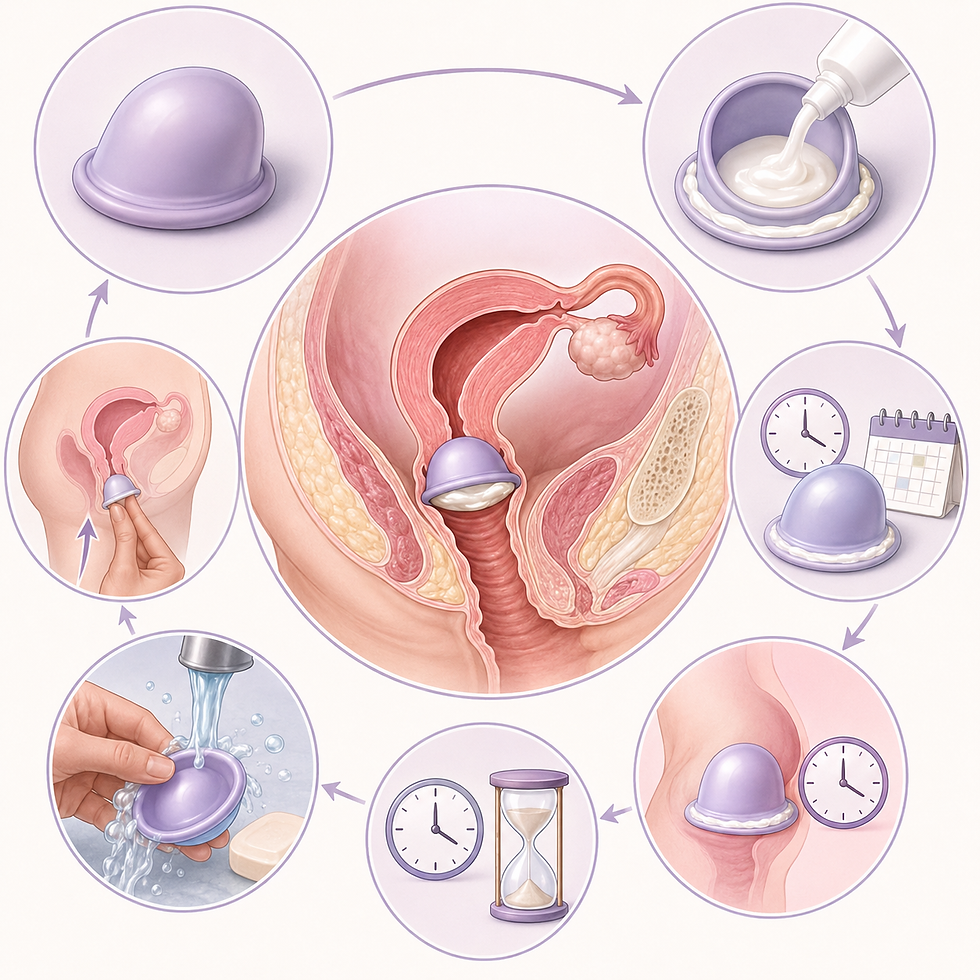
A cervical cap is a small, soft, thimble-shaped silicone cup that fits directly over the cervix. It's used as a barrier method of contraception, holding spermicide against the cervix and physically blocking sperm from entering the uterus.
The most common cervical cap currently available in the United States is FemCap, which is made of silicone and comes in three sizes based on a woman's obstetric history. Older latex caps, such as the Prentif cap, have largely been discontinued. Internationally, a few additional cervical cap options exist.
Cervical caps are typically:
Inserted before sexual activity (can be placed several hours before)
Used with spermicide applied inside the cap and sometimes around its rim
Left in place for at least six hours after intercourse
Worn for no longer than 48 hours total per use
Reusable, with proper cleaning between uses
How Cervical Caps Differ From Diaphragms
Many women assume cervical caps and diaphragms are essentially the same. They aren't. The differences matter, both for effectiveness and for UTI risk.
Feature | Diaphragm | Cervical Cap |
Size | Larger, covers a wide area of the upper vagina | Smaller, fits only over the cervix |
Position | Vaginal vault, presses against the front vaginal wall and bladder neck | Directly on the cervix |
Pressure on urethra | Significant | Less direct, but still relevant |
Wear time | At least 6 hours after sex, up to 24 hours | At least 6 hours after sex, up to 48 hours |
Spermicide required | Yes | Yes |
Effectiveness with typical use | Around 88% | Around 71-86% depending on parity |
UTI risk | High, especially with spermicide | High, especially with spermicide |
Both methods are considered high-risk for women prone to recurrent UTIs, but the specific risk factors differ slightly. Understanding which apply to you helps in deciding what to do.
Why Cervical Caps Increase UTI Risk
There are several overlapping reasons cervical caps are associated with higher UTI rates, particularly when used with spermicide.

The Spermicide Requirement
This is the largest single factor. Cervical caps depend on spermicide for effectiveness. Most spermicide used with cervical caps contains nonoxynol-9 (N-9), which is well-documented to disrupt the vaginal microbiome in ways that significantly increase UTI risk.
N-9 affects the bladder and vaginal environment by:
Killing or weakening protective Lactobacillus bacteria
Raising vaginal pH
Increasing E. coli colonization
Causing mucosal irritation
Sometimes triggering inflammation in already sensitive tissue
Because cervical cap use requires spermicide every time, regular cervical cap use also means regular spermicide exposure, often multiple times per week for sexually active women. That repeated exposure compounds the microbiome disruption.

Prolonged Wear Time
Cervical caps can be worn for up to 48 hours per use, which is longer than diaphragms. During that time:
Spermicide stays in contact with vaginal tissue
Cervical secretions can accumulate
The vaginal environment shifts in ways that can favor bacterial growth
Sensitive tissue remains in contact with a foreign object
For women already prone to recurrent UTIs, this prolonged exposure can be particularly problematic.

Subtle Mechanical Effects
Cervical caps sit higher than diaphragms, so they don't press directly on the bladder neck the way diaphragms do. They aren't risk-free mechanically, however. Some women experience:
Mild vaginal irritation or discomfort
Changes in vaginal discharge patterns
Cervical irritation, especially with longer wear times
While the mechanical UTI risk from a cervical cap alone is smaller than from a diaphragm, it isn't zero, especially when combined with the spermicide and prolonged wear factors.

Microbiome Disruption Adds Up
The combination of N-9 exposure, prolonged contact, and frequent use creates a vaginal environment that's significantly less protective against the bacteria that cause UTIs. For women with recurrent UTIs, this can mean that even with all other preventive habits in place, the cervical cap itself is part of what keeps the cycle going.
Effectiveness and Risk: The Honest Trade-Offs
It's worth being clear about another part of the picture. Cervical caps are also less effective at preventing pregnancy than many other contraceptive methods. Typical-use effectiveness ranges from around 71% for women who have given birth to around 86% for women who haven't.
For some women, the combination of higher UTI risk and lower contraceptive effectiveness is a meaningful consideration. For others, the autonomy, non-hormonal nature, and user-controlled design of the cervical cap outweigh these trade-offs. The choice is yours to make.
The point is to make it with the full picture.

If you're using a cervical cap and dealing with recurrent UTIs, you don't have to keep navigating this alone. Visit Clinova Solutions to learn how clinician-led telehealth care can help you understand your options and build a plan that protects both your contraceptive needs and your urinary health.
Signs Your Cervical Cap May Be Contributing
Not every cervical cap user will develop recurrent UTIs, but the following patterns suggest a connection worth exploring:
UTIs that consistently follow intimacy, especially within 24 to 48 hours
Symptoms that started or worsened after you began using a cervical cap
Recurrent BV or yeast infections alongside your UTIs
Vaginal irritation, dryness, or burning after intercourse or while the cap is in
A sense that something about your cap or spermicide is contributing, even before anyone confirms it
Repeated antibiotic courses without lasting resolution
If any of these sound familiar, your cervical cap and spermicide may be worth raising with a clinician knowledgeable in recurrent UTI care.
Alternatives Worth Knowing About
Switching contraception is personal, and the right alternative depends on your goals, preferences, and health history. Here's a brief overview of options that don't carry the same UTI-risk profile as cervical cap and spermicide use.
Other Non-Hormonal Methods

For women drawn to cervical caps specifically because they're non-hormonal, several other options exist:
Copper IUD. Long-acting, highly effective, non-hormonal. Does not involve spermicide. Some research has explored modest microbiome effects, but evidence varies.
Phexxi. A newer non-hormonal vaginal gel that works by maintaining the natural acidic pH of the vagina to immobilize sperm. Unlike N-9, it doesn't chemically disrupt vaginal bacteria. It's worth noting that effectiveness is lower than some other methods.
Condoms without spermicide. Widely available and don't involve N-9. Reading the package matters, as some condoms are spermicidally lubricated.
Internal (female) condoms without spermicide.
Fertility awareness methods. Effectiveness depends heavily on consistent use.
Tubal ligation or salpingectomy for women who are certain about not wanting future pregnancies.
Hormonal Methods

If you're open to considering hormonal options, several aren't associated with the same UTI-risk profile as cervical cap and N-9 use:
Combined oral contraceptive pills
Progestin-only pills
The patch
The vaginal ring
The contraceptive injection
Hormonal IUDs
Each of these comes with its own considerations, side effects, and benefits worth discussing with a provider.
What If You Want to Keep Using Your Cervical Cap?
This is your body and your choice. If a cervical cap fits well in your life and you want to continue using it, there are still steps that may reduce UTI risk:
Urinate before and immediately after intimacy. This is one of the most evidence-supported prevention strategies for UTIs in general, and especially important with barrier methods.
Remove your cap at the minimum required time. Six hours after intercourse is the standard. Leaving it in longer than necessary increases exposure to spermicide and prolonged wear-related effects.
Stay well hydrated.
Make sure your cap is the correct size. If your obstetric history has changed (after pregnancy or childbirth), your size may need to be reassessed.
Clean your cap thoroughly between uses.
Talk to your provider about prevention strategies. This may include low-dose preventive antibiotics, vaginal estrogen if relevant, D-mannose, or other targeted approaches.
Support your vaginal microbiome. Targeted probiotic strategies under guidance, gentle vulvar care, and avoiding other irritants can all help.
Consider hormonal optimization if you're in perimenopause or menopause, since low estrogen amplifies UTI risk and combines unfavorably with any spermicide use.
Track your patterns. A symptom journal alongside contraceptive use can clarify how much of your UTI burden may be related to the cap.
Information is power either way. Many women find that small adjustments make their cervical cap workable. Others eventually decide that switching is the better choice for them. Both can be right answers.
Want a clear, easy-to-share resource you can keep or bring to a contraceptive conversation with your provider? Download our free Clinova UTI and bladder health guide.
How to Talk to Your Provider
Some women feel hesitant to raise contraception in a UTI conversation, or vice versa. They feel like separate topics. They really aren't.
Useful questions to ask:
"Could my cervical cap be contributing to my recurrent UTIs?"
"Are there ways to use my cervical cap that might reduce UTI risk?"
"Would a different contraceptive method likely lower my risk?"
"What are the trade-offs of different options for me specifically?"
"Should I be evaluated for other factors driving my recurrent infections?"
A good provider will welcome these questions. If yours doesn't, seeking care from a clinician who specializes in recurrent UTIs and women's health is a reasonable next step.
When to Seek Professional Support
Please consider reaching out to a qualified clinician if you experience:
Two or more UTIs in six months, or three or more in a year
UTIs that consistently follow intimacy or cervical cap use
Vaginal irritation, dryness, or burning while using your cap
Recurrent BV or yeast infections alongside UTIs
Repeated antibiotic courses without lasting relief
A sense that your contraceptive method is affecting your overall comfort
Frustration with care that hasn't addressed contraceptive factors
You should always seek prompt care for fever, back pain, chills, vomiting, or blood in your urine.
How Clinova Solutions Can Help
Clinova Solutions specializes in caring for women with recurrent UTIs, chronic urinary symptoms, and the conditions that often surround them. We understand that contraceptive choices are deeply personal, and that you deserve thoughtful, judgment-free conversations and clear information.
Our approach is built around:
Clinician-led telehealth care so you can access expert support from home
Personalized plans based on your unique history, symptoms, and goals
An education-first philosophy that helps you truly understand your body and your options
Judgment-free conversations about every factor that may be contributing to your symptoms, including contraception
Specialized expertise in recurrent UTIs and the wider range of conditions that surround them
Prevention-focused strategies designed to support long-term comfort and confidence
You deserve care that connects the dots, listens carefully, and helps you build a plan that works for the long term.
To take a more informed next step, you can:
Download our free UTI and bladder health guide for a clear, practical resource you can keep and share.
Visit Clinova Solutions to learn more about our care model and how we support women through every stage of urinary and vaginal health.
Frequently Asked Questions
Does using a cervical cap really increase UTI risk?
Yes. Cervical cap use is associated with a higher risk of UTIs, primarily because cervical caps require spermicide and are worn for prolonged periods. The nonoxynol-9 in most spermicides disrupts the protective vaginal microbiome and increases E. coli colonization around the urethra.
Is the cervical cap riskier than the diaphragm for UTIs?
The exact comparison depends on the individual, but both are considered high-risk methods. Diaphragms add more direct mechanical pressure on the urethra and bladder neck. Cervical caps involve longer wear times. Both require spermicide, which is the largest shared risk factor.
Can I use a cervical cap without spermicide?
Cervical caps depend on spermicide for effectiveness. Using one without spermicide significantly reduces its contraceptive reliability. If avoiding spermicide is important to you, exploring other contraceptive methods is generally the more practical path.
How long can I leave my cervical cap in?
A cervical cap must stay in place for at least six hours after intercourse and should not be worn for more than 48 hours total. Removing it at the minimum recommended time (rather than the maximum) may help reduce some of the cumulative effects on the vaginal environment.
Will switching contraception cure my recurrent UTIs?
Not always. Recurrent UTIs are usually multifactorial. Switching from cervical cap and spermicide use can meaningfully reduce risk, but lasting improvement often requires addressing other factors as well, such as hormones, microbiome, pelvic floor function, and prevention strategies.
Are there non-hormonal alternatives that won't increase my UTI risk?
Yes. The copper IUD is a long-acting non-hormonal option that doesn't involve spermicide. Phexxi is a newer non-hormonal vaginal gel that maintains acidic vaginal pH to immobilize sperm without disrupting protective bacteria. Non-spermicidal condoms are also widely available.
What is Phexxi, and is it a better option?
Phexxi is a non-hormonal contraceptive gel that maintains the natural acidic pH of the vagina, which immobilizes sperm. Because it supports (rather than disrupts) the acidic environment that protective Lactobacillus depends on, it may be a more microbiome-friendly option than N-9. It's a newer option and less effective than some methods, so weighing the trade-offs with a knowledgeable provider matters.
Is this my fault for using a cervical cap?
No. Most women who use cervical caps are never told about the UTI risk. You made a thoughtful contraceptive choice based on the information you had. Having more information now simply gives you more options going forward.
Can I use vaginal estrogen with a cervical cap?
For women in perimenopause or menopause, vaginal estrogen can support tissue health and reduce UTI risk. Talk to your clinician about timing and how to use it alongside any contraceptive method. There may be product-specific considerations to discuss.
When should I see a clinician?
Anytime your UTIs are recurrent, your contraception is causing discomfort, or you want to explore whether changes might help. Earlier conversations often lead to easier, more effective change.
Follow Along for Ongoing Recurrent UTI Education & Support
Healing starts with understanding what's really going on in your body, and you should not have to figure it out alone.
We regularly share educational content about recurrent UTIs, bladder health, pelvic floor dysfunction, hormones, microbiome balance, prevention strategies, and evidence-informed approaches to chronic urinary symptoms across our social platforms.
Follow us for:
Recurrent UTI education
Prevention tips and symptom support
Bladder health insights
Expert-backed wellness content
New videos resources
Real conversations women are not hearing elsewhere
Facebook: Chronic UTI Care
Instagram: chronicuticare
YouTube: Chronic UTI
We’re here to help women feel informed, supported, and empowered through every stage of their healing journey.
This article is for educational purposes only and is not a substitute for individualized medical advice. Please consult a qualified clinician about your specific symptoms and health history.


Comments