Cystoscopy and Recurrent UTI Risk: What to Expect Before, During, and After the Procedure

Written and approved by Dr. Jasmine Bonder and Dr. Adam Bonder
Introduction: A Common Procedure With Manageable Risk
If you've been scheduled for a cystoscopy, you may be feeling a mix of curiosity, anxiety, and questions about what to expect. That's completely understandable. Even though cystoscopy is one of the most common urologic procedures performed worldwide, most women going through it for the first time don't have a clear picture of what happens, what's normal afterward, and what to watch for.
One of the questions that comes up often is whether cystoscopy increases your risk of a urinary tract infection. The honest answer is yes, somewhat. Cystoscopy is considered moderate-risk for UTIs. Not as low as no procedure at all, and not as high as continuous catheter use or stent placement. With reasonable precautions and good aftercare, most women recover without significant problems.
This guide will walk you through what cystoscopy is, why it carries some UTI risk, how to tell normal post-procedure symptoms from a true infection, and what evidence-informed steps can help you recover comfortably. Our goal is to take some of the anxiety out of the experience by giving you clear information.

If you'd like a printable companion resource to bring to your next appointment, you can grab our free Clinova UTI and bladder health guide here anytime.
What a Cystoscope Is
A cystoscope is a thin medical instrument that allows a clinician to look directly inside the urethra and bladder. It has a small light and camera at its tip, transmitting images back to the clinician during the procedure.
There are two main types:
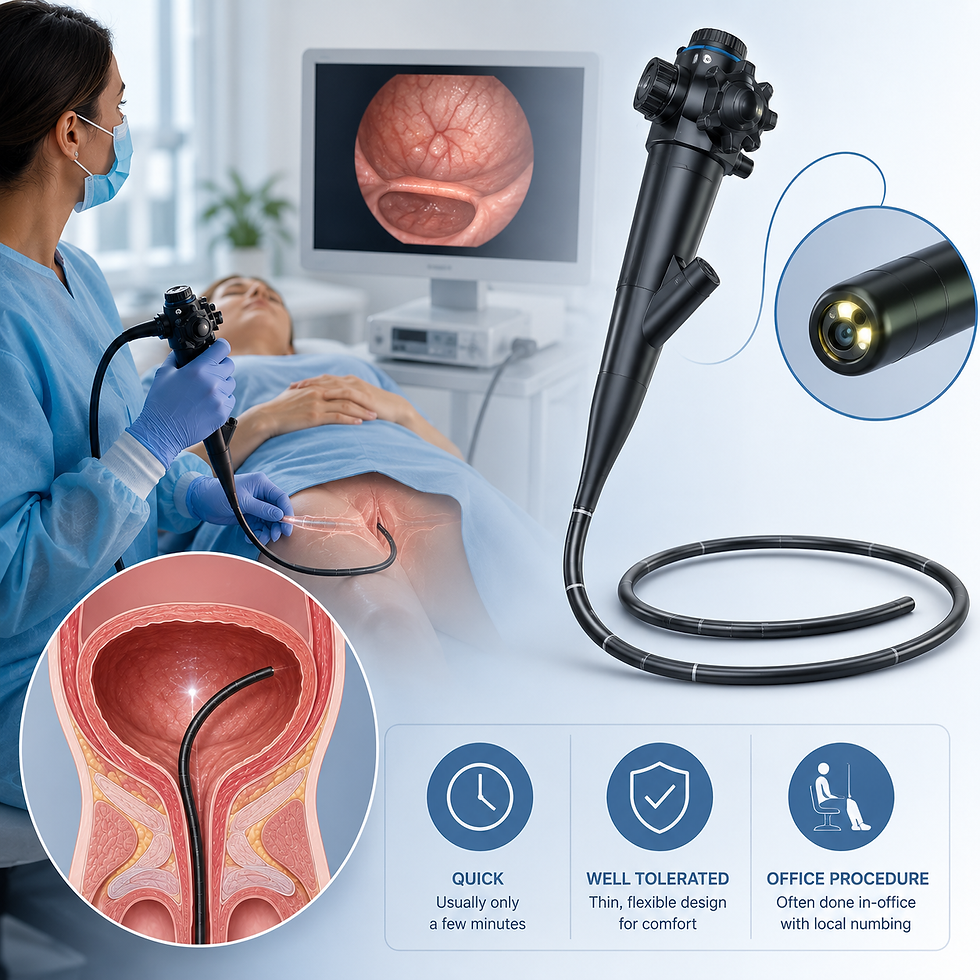
Flexible Cystoscope
A thin, soft, bendable instrument used most commonly for diagnostic cystoscopy. Flexible cystoscopes are generally well tolerated, often done in an office setting with local numbing, and the procedure usually takes only a few minutes.

Rigid Cystoscope
A straight, more substantial instrument used for therapeutic procedures, biopsies, certain treatments, and some diagnostic situations. Rigid cystoscopy is typically performed in an operating room or procedure suite, sometimes under sedation or anesthesia, depending on what's being done.
Both types are inserted through the urethra into the bladder. Each has its place depending on the clinical situation.
Why Cystoscopy Is Done
Cystoscopy is used for many reasons, including:
Investigating blood in the urine (hematuria)
Evaluating recurrent UTIs to look for structural issues
Investigating bladder pain or symptoms suggestive of interstitial cystitis
Bladder cancer surveillance and follow-up
Removing bladder stones or foreign bodies
Stent placement or removal
Bladder biopsies
Tumor resection (TURBT)
Botox injections into the bladder
Treating certain types of strictures
Some treatments for incontinence
The specific procedure determines the type of cystoscope used, the length of the procedure, and the level of risk involved.
Why Cystoscopy Carries Moderate UTI Risk
Several factors make cystoscopy a higher-risk activity than no procedure at all, but lower-risk than continuous catheter or stent use.
Instrument Passage Through the Urethra
Inserting any instrument through the urethra temporarily disrupts the body's natural urethral defenses. This can allow bacteria from the urethral opening to be introduced into the bladder.
Brief Exposure, Not Continuous
This is the key reason cystoscopy is moderate rather than high risk. Unlike a Foley catheter that stays in for days or a stent that stays for weeks, a cystoscope is in the body only for the duration of the procedure, usually minutes. Once removed, your urethral defenses begin recovering immediately.
Trauma and Inflammation
Even gentle cystoscopy causes some degree of urethral and bladder irritation. This is normal and not a sign that anything is wrong, but it does create tissue that's more vulnerable to bacteria for a short time afterward.
Procedure-Specific Factors
UTI risk varies significantly depending on what's done during cystoscopy:
Simple diagnostic flexible cystoscopy carries the lowest UTI risk
Procedures with biopsies, resections, or interventions carry higher risk
Longer or more complex procedures generally carry more risk than brief diagnostic looks
Use of irrigation fluid during the procedure can be another factor
Patient-Specific Risk Factors
Some patients are more likely to develop a UTI after cystoscopy than others. Factors that increase individual risk include:
A history of recurrent UTIs
Current bacteriuria (bacteria in urine, even without symptoms)
An indwelling catheter
Diabetes or immune system conditions
Postmenopausal status (lower estrogen, more vulnerable tissue)
Female anatomy (shorter urethra makes ascending infection more straightforward)
Recent antibiotic use that has disrupted the microbiome
Anatomical abnormalities
The Changing Guidelines on Prophylactic Antibiotics
For years, it was common practice to give all cystoscopy patients antibiotics before the procedure to prevent UTIs. Current guidelines have shifted, and routine antibiotic prophylaxis is no longer recommended for everyone.
The reasons for the change include:
Routine antibiotic use contributes to antibiotic resistance
Most patients having simple diagnostic cystoscopy don't develop UTIs even without antibiotics
The risk-benefit balance favors targeted use, not universal use
Antibiotic-related microbiome disruption has its own consequences
Current professional guidelines (including those from the American Urological Association and European Association of Urology) generally support:
No routine antibiotic prophylaxis for low-risk patients having simple diagnostic cystoscopy
Targeted antibiotic prophylaxis for higher-risk patients or higher-risk procedures
Treatment of pre-existing bacteriuria before the procedure when appropriate
This is an area where individualized care matters. If your provider has recommended prophylactic antibiotics, they likely have specific reasons. If they haven't, this also reflects current evidence-based practice rather than oversight.
Normal Post-Cystoscopy Symptoms
Here's where many women get worried unnecessarily. Most post-cystoscopy symptoms are normal and don't indicate infection. Knowing what's expected helps you avoid panic and recognize when something is actually different.
Normal post-cystoscopy symptoms can include:
Mild burning with urination for 1 to 3 days
Small amounts of blood in the urine for 1 to 3 days, often described as "pink-tinged" urine
Mild bladder discomfort or urgency
A sense that you need to urinate more often than usual
Slight discomfort at the urethral opening
Mild fatigue from the procedure
These symptoms typically improve each day after the procedure. They are signs of normal tissue irritation and recovery, not infection.
When Post-Cystoscopy Symptoms Suggest Infection
The following signs suggest that you may have developed a UTI after your procedure and need evaluation:
Symptoms that are worsening rather than improving after a few days
Fever, especially above 100.4°F (38°C)
Chills
Significant flank or back pain, especially one-sided
Heavy bleeding that's increasing rather than tapering off
Severe bladder pain
Nausea or vomiting
Feeling significantly unwell or "off"
Cloudy, foul-smelling urine that develops several days after the procedure
Symptoms that appear several days after the procedure when initial recovery seemed complete
The timing of symptoms matters. Symptoms that appear immediately and gradually improve are usually normal post-procedure effects. Symptoms that appear later or worsen over time are more concerning for infection.
If you're not sure whether what you're feeling is normal or a sign of infection, don't hesitate to contact your provider. A urine culture and quick evaluation can clarify the picture.

If you've had recurrent UTIs after cystoscopy or ongoing bladder symptoms, you don't have to keep navigating this alone. Visit Clinova Solutions to learn how clinician-led telehealth care can help you understand what's happening and support your recovery.
Special Considerations for Women With Recurrent UTIs
If you have a history of recurrent UTIs and are scheduled for cystoscopy, you have some specific considerations worth discussing with your provider.
Pre-Procedure Optimization
Treat any active infection before the procedure
Discuss whether prophylactic antibiotics are appropriate for your situation
Address modifiable risk factors (hydration, microbiome support, hormonal optimization if relevant)
Make sure your provider knows your full UTI history
The Risk of Cystoscopy Triggering a Flare
For some women with recurrent UTIs or interstitial cystitis, cystoscopy itself can trigger a flare. This isn't always preventable, but knowing in advance helps you plan and have a treatment plan ready if a flare occurs.
Recovery Support
For women with recurrent UTIs, post-cystoscopy care may benefit from additional support:
Extra hydration
Avoiding bladder irritants for a week or so
Pelvic floor relaxation if you're prone to tension flares
Following up sooner if symptoms develop
Special Considerations for Women With Interstitial Cystitis
Cystoscopy is sometimes part of the diagnostic process for IC, and the procedure itself can flare symptoms. If you have IC or are being evaluated for it:
Discuss the procedure plan with your provider in detail
Know that flare symptoms after the procedure can occur and don't necessarily mean infection
Have a plan for flare management already in place
Consider bladder instillation therapy as part of recovery support
Allow extra time for full recovery
Prevention Strategies
Before the Procedure
Stay well hydrated leading up to the procedure
Treat any active UTI or bacteriuria before the procedure
Discuss your full medical history and prior UTI history with your provider
Discuss whether prophylactic antibiotics are appropriate
Empty your bladder shortly before the procedure (as instructed)
After the Procedure
Stay well hydrated, aiming to keep urine pale
Urinate normally and frequently
Avoid known bladder irritants for a few days (coffee, alcohol, spicy foods, citrus, artificial sweeteners)
Use a warm compress on the lower abdomen for comfort
Avoid intercourse for at least 24 to 48 hours, or as advised by your provider
Rest, even if you feel mostly fine
Watch for the symptoms described above
If You're Prone to UTIs
Discuss timing of your usual prevention strategies (D-mannose, low-dose preventive antibiotics, vaginal estrogen) with your provider
Consider following up with your urinary care provider after the procedure
Track symptoms carefully so you can act early if needed
Want a clear, easy-to-share resource you can bring to your provider before or after your cystoscopy? Download our free Clinova UTI and bladder health guide.
When to Seek Urgent Care
Please seek prompt medical attention after cystoscopy if you experience:
Fever above 100.4°F (38°C) or chills
Severe pain that isn't manageable
Heavy bleeding (more than a small amount of pink-tinged urine)
Inability to urinate
Symptoms suggesting a kidney infection (flank pain, severe back pain, vomiting)
Severe nausea or vomiting
Confusion or significant changes in how you feel
Feeling generally very unwell
Cystoscopy-related kidney infections can progress quickly to serious illness. Don't wait if symptoms feel intense.
You should also seek follow-up if you experience:
Symptoms that aren't improving after a few days
New symptoms appearing several days after the procedure
Recurring UTIs that follow a cystoscopy pattern
Lingering bladder discomfort beyond a week or two
A sense that something isn't quite right
How to Talk to Your Provider
Useful questions to ask:
Before the procedure:
"Given my history, do I need prophylactic antibiotics?"
"What can I do beforehand to reduce my UTI risk?"
"Should I continue my usual UTI prevention strategies?"
"What symptoms should I watch for afterward?"
"When should I call you versus seek urgent care?"
After the procedure:
"What is normal recovery, and what isn't?"
"When should I follow up if symptoms aren't improving?"
"Are there steps I should take to support my bladder lining recovery?"
"If I get a UTI, what's the right treatment approach for me?"
A good provider will welcome these questions. If yours doesn't address them adequately, seeking care from a clinician who specializes in recurrent UTIs and women's health is a reasonable next step.
How Clinova Solutions Can Help
Clinova Solutions specializes in caring for women with recurrent UTIs, chronic urinary symptoms, and the conditions that often surround urinary care. We can be a valuable complement to your urologist's care, particularly if you experience:
Recurrent UTIs after cystoscopy or other urinary procedures
Persistent bladder symptoms after cystoscopy
Concerns about cystoscopy in the context of an existing recurrent UTI history
A flare of IC or chronic urinary symptoms after a procedure
A need for comprehensive urinary care that goes beyond reactive treatment
Our approach is built around:
Clinician-led telehealth care so you can access expert support from home
Personalized plans based on your unique history, symptoms, and goals
An education-first philosophy that helps you truly understand your body
Specialized expertise in recurrent UTIs and the wider range of conditions that surround them
Bladder instillation therapy for women whose post-procedure bladder symptoms or GAG layer damage need targeted treatment
Coordination with your urologist or specialist for the most comprehensive approach
You deserve care that takes your urinary health seriously and supports you through every stage of evaluation and recovery.
To take a more informed next step, you can:
Download our free UTI and bladder health guide for a clear, practical resource you can keep and share.
Visit Clinova Solutions to learn more about our care model and how we support women through every stage of urinary health.
Frequently Asked Questions
Why does cystoscopy increase UTI risk?
Cystoscopy involves passing an instrument through the urethra, which temporarily disrupts natural defenses and can introduce bacteria. The exposure is brief (unlike continuous catheters or stents), which is why it's considered moderate rather than high risk.
How common are UTIs after cystoscopy?
Rates vary depending on the procedure type and patient factors. Simple diagnostic flexible cystoscopy in low-risk patients typically has a UTI rate of 2 to 5 percent. Procedures involving biopsies, resections, or longer interventions, especially in higher-risk patients, can have rates of 10 to 15 percent or more.
Will I be given antibiotics before my cystoscopy?
Maybe, depending on your individual risk factors and the type of procedure. Current guidelines no longer recommend routine antibiotic prophylaxis for all patients. They support targeted prophylaxis for higher-risk patients or procedures and treatment of pre-existing bacteriuria when present. If your provider hasn't recommended antibiotics, that may reflect current evidence-based practice rather than oversight.
How long do normal post-cystoscopy symptoms last?
Most normal symptoms (mild burning, pink-tinged urine, mild urgency, slight discomfort) resolve within 1 to 3 days. If symptoms persist beyond a few days, worsen, or are accompanied by fever, that's worth medical evaluation.
How do I tell the difference between normal symptoms and a UTI after cystoscopy?
Timing and trajectory help. Normal symptoms appear right after the procedure and gradually improve each day. UTI symptoms tend to either worsen over time, appear several days after the procedure when initial recovery seemed complete, or are accompanied by fever, chills, severe pain, or feeling generally unwell.
Can cystoscopy trigger a flare in interstitial cystitis?
Yes, sometimes. The procedure can irritate already sensitive bladder tissue. If you have IC, discuss this risk with your provider in advance, have a flare management plan ready, and consider bladder instillation therapy as part of post-procedure recovery if symptoms persist.
Is it safe to have intercourse after cystoscopy?
Most providers recommend avoiding intercourse for 24 to 48 hours after the procedure to allow tissue to recover. Your specific provider may have different guidance based on what was done.
Can I work the day after my cystoscopy?
For simple diagnostic flexible cystoscopy, most patients return to normal activities the same day or the next day. For more complex procedures, recovery time may be longer. Follow your provider's specific guidance.
How can I reduce my UTI risk before cystoscopy?
Stay well hydrated, treat any active infection beforehand, discuss your full UTI history with your provider, and ask whether prophylactic antibiotics are appropriate for your situation.
What if I keep getting UTIs after every cystoscopy?
This is worth specific attention. Some women are more vulnerable to post-procedure UTIs and benefit from individualized prevention plans, including targeted prophylactic antibiotics, bladder lining support, hormonal optimization, and microbiome support. A clinician specializing in recurrent UTIs can help build a plan.
Can bladder instillation therapy help after cystoscopy?
In some cases, yes. For women with persistent bladder symptoms after cystoscopy, instillation therapy with hyaluronic acid or other GAG layer repair agents can support recovery. This is most relevant for women with prior bladder vulnerability or those who experience prolonged post-procedure symptoms.
When should I see a clinician?
Anytime your symptoms suggest infection (worsening pain, fever, feeling unwell) or anytime your recovery isn't progressing as expected. Earlier follow-up is almost always better than later.
Follow Along for Ongoing Recurrent UTI Education & Support
Healing starts with understanding what's really going on in your body, and you should not have to figure it out alone.
We regularly share educational content about recurrent UTIs, bladder health, pelvic floor dysfunction, hormones, microbiome balance, prevention strategies, and evidence-informed approaches to chronic urinary symptoms across our social platforms.
Follow us for:
Recurrent UTI education
Prevention tips and symptom support
Bladder health insights
Expert-backed wellness content
New videos resources
Real conversations women are not hearing elsewhere
Facebook: Chronic UTI Care
Instagram: chronicuticare
YouTube: Chronic UTI
We’re here to help women feel informed, supported, and empowered through every stage of their healing journey.
This article is for educational purposes only and is not a substitute for individualized medical advice. Please consult a qualified clinician about your specific symptoms and health history.


Comments