Post-UTI Hypersensitivity: Why Your Bladder Still Hurts After the Infection Is Gone

Updated: Jun 19
Written and approved by Dr. Jasmine Bonder and Dr. Adam Bonder
You took every pill. You followed every instruction. Your culture came back clear. By every medical measure, your UTI is gone. And yet your bladder still feels irritated, still feels like it's on alert, still sends you to the bathroom far too often.
You're not imagining it. You're not being dramatic. And you're not "just anxious."
What you may be experiencing has a name. It's called post-UTI hypersensitivity, sometimes referred to as post-infectious bladder hypersensitivity or post-UTI syndrome. It's a real, well-documented phenomenon, and it affects far more women than you might think.
In this guide, we'll walk through what post-UTI hypersensitivity is, why it happens, how it differs from a new infection, and what can actually help your bladder recover. Our goal is to help you feel more informed, more validated, and more equipped to support your body through this stage.

If you'd like a printable resource to keep at hand or share with your provider, you can download our free Clinova UTI and bladder health guide anytime.
What Is Post-UTI Hypersensitivity?

Post-UTI hypersensitivity is a state in which the bladder remains irritated, sensitive, and symptomatic for a period of time after a urinary tract infection has been successfully treated.
In simple terms, the bacteria are gone, but the bladder hasn't fully calmed down yet.
Symptoms can include:
Lingering burning or stinging with urination
Urgency that feels strong even when very little urine is present
Frequency, sometimes every twenty to thirty minutes
A constant feeling of pressure or fullness
Pelvic discomfort or low abdominal pain
A sense that "something isn't right" even though tests look normal
Mild flares triggered by certain foods, intimacy, or stress
This experience can last days, weeks, or in some cases longer. For many women, it gradually fades as the bladder heals. For others, it can drag on and start to feel like a chronic condition, which is one reason this phase deserves real attention.
When a UTI happens, your bladder doesn't just experience a brief bacterial visit. It goes through a real inflammatory event. Several systems in and around the bladder shift into protective mode, and they don't always switch off the moment antibiotics finish. Here's what's going on beneath the surface.

The inside of your bladder is coated with a protective layer called the glycosaminoglycan (GAG) layer. During a UTI, this layer can become damaged or thinned. Until it fully repairs, urine itself can feel irritating, even when no bacteria are present.
Think of it like a scrape on your skin. The wound may close, but the area can still feel raw and sensitive for a while.

During an infection, the nerves in and around the bladder ramp up their sensitivity to help your body recognize and respond to the problem. After the infection is gone, those nerves don't always return to baseline right away.
This is sometimes called peripheral sensitization. In some cases, the spinal cord and brain also become more responsive, a process called central sensitization. The result is that normal sensations, like a partially filled bladder, can feel painful or urgent.

Even after bacteria are cleared, inflammatory chemicals in the bladder tissue take time to settle. Mast cells and immune cells continue releasing signaling molecules as part of the healing process.
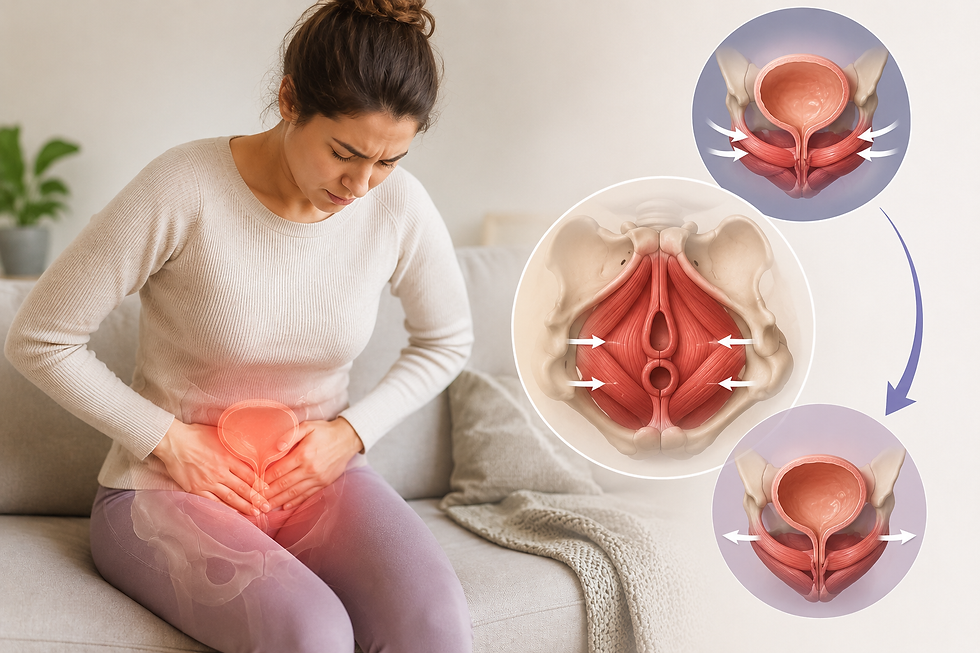
Your body is wise. When the bladder hurts, the pelvic floor muscles often tighten to protect it. The problem is that these muscles can stay tight long after the infection has resolved, creating ongoing pain, urgency, and a sense that you can't fully relax or empty.
This is one of the most overlooked contributors to post-UTI symptoms, and it's also one of the most treatable.

Antibiotics save lives, but they don't only affect harmful bacteria. They also disrupt the protective bacteria in your gut, vagina, and bladder. That temporary imbalance can leave the urinary environment more reactive and less resilient for a period afterward.

In some cases, small numbers of bacteria may persist below the level that standard urine cultures can detect. These low-level populations may continue to irritate the bladder without producing a clearly positive test result, which can be especially confusing for women and their providers.
How Post-UTI Hypersensitivity Differs From Other Conditions
Because the symptoms can feel identical to a UTI, it's easy to assume you're dealing with another infection. Understanding the differences can help you avoid unnecessary antibiotic courses and get the right kind of support.
Feature | Active UTI | Post-UTI Hypersensitivity | Interstitial Cystitis (IC) |
Recent infection | Yes, current | Yes, recently treated | Not necessarily |
Urine culture | Usually positive | Typically negative | Typically negative |
Antibiotic response | Clear improvement | Little to no response | Little to no response |
Pattern over time | Resolves with treatment | Gradually improves over weeks | Chronic and fluctuating |
Common triggers | Less predictable | Bladder filling, certain foods, stress | Foods, stress, hormones, intimacy |
If you've recently completed antibiotics and your symptoms are slowly improving, post-UTI hypersensitivity is a likely explanation. If symptoms persist for many months or don't improve at all, it may be worth exploring whether something like interstitial cystitis is part of the picture.
Why So Many Women Feel Dismissed in This Phase
If you've been told, "Your culture is negative, so you're fine," you are not alone. This is one of the most frustrating gaps in standard UTI care. Many women in the post-UTI window are sent home without any explanation for their ongoing symptoms, which can lead to:
Repeated unnecessary antibiotic courses
A growing sense that providers don't believe them
Anxiety about the next flare
Avoidance of sex, exercise, or social plans
A feeling of being stuck in limbo
None of this is in your head. Your bladder is genuinely still recovering, and you deserve care that acknowledges that.

If you've felt unheard after a UTI, you don't have to keep navigating this alone. Visit Clinova Solutions to learn how clinician-led telehealth care can help you understand what's happening and wh
How Long Does Post-UTI Hypersensitivity Last?
The honest answer is that it varies. Many women feel noticeably better within two to four weeks of completing treatment. Some experience symptoms for several months as their bladder lining, nerves, and pelvic floor fully recover.
A few factors can influence the timeline:
The severity of the original infection
How many UTIs you've had in the past
Hormonal status, especially during perimenopause and menopause
Pelvic floor health
Microbiome resilience
Stress and overall health
If your symptoms aren't improving at all after several weeks, or if they're getting worse, it's worth seeking a more comprehensive evaluation rather than assuming the cycle will simply restart.
What Helps Your Bladder Recover
Healing from a UTI is more than just clearing the bacteria. Supporting your bladder through the recovery window can make a meaningful difference in how quickly and fully you feel like yourself again.
Be Gentle With Hydration
Sip steadily through the day so urine stays a pale straw color. Very concentrated urine can irritate an already sensitive bladder. Drinking large volumes all at once can also worsen urgency.
Soothe, Don't Stress, the Bladder
While your bladder is healing, it may help to temporarily reduce known irritants:
Coffee and caffeinated tea
Alcohol, especially wine
Carbonated beverages
Citrus juices
Tomatoes and tomato-based sauces
Spicy foods
Artificial sweeteners
This isn't a forever list. Most women can gradually reintroduce these foods as the bladder recovers. The goal during the post-UTI window is simply to give your bladder a break.
Support Your Pelvic Floor
If you've been clenching, holding tension, or feeling like you can't fully empty, your pelvic floor may need attention. Gentle relaxation techniques, diaphragmatic breathing, and a referral to a pelvic floor physical therapist can be deeply helpful. Many women describe this as the missing piece in their recovery.
Restore Your Microbiome
Antibiotics affect more than the bladder. Supporting gut and vaginal microbiome balance through diet and, when appropriate, targeted probiotic strategies can help your body return to a more resilient state. This is a great topic to discuss with a clinician who understands the bigger picture.
Hormonal Considerations
If you're in perimenopause or menopause, low estrogen can slow tissue recovery and make post-UTI symptoms worse and more lingering. Vaginal estrogen is one of the most evidence-supported tools for reducing recurrent and lingering UTI symptoms in this stage of life.
Calm the Nervous System
Stress doesn't cause post-UTI hypersensitivity, but it can amplify it. Practices like slow breathing, gentle movement, mindfulness, and adequate sleep help your nervous system come down from its protective state. This is supportive care, not a suggestion that your symptoms are imaginary.
Avoid the Antibiotic Loop
If your culture is negative but you're being prescribed another course of antibiotics "just in case," it's reasonable to ask whether post-UTI hypersensitivity might be a better explanation. Unnecessary antibiotics can disrupt your microbiome further and delay healing.
Want a clear, printable companion to support your recovery? Download our free Clinova UTI and bladder health guide. It includes practical strategies and questions to bring to your provider.
Practical Daily Tips During Recovery
Small changes can add up during the post-UTI window. Here are gentle, realistic habits to consider:
Track your symptoms. Note timing, severity, food, stress, sleep, intimacy, and cycle. Patterns often emerge that guide care.
Don't hold urine for long periods, but also don't rush to the bathroom at the first hint of urgency. Try to gradually normalize bladder behavior.
Empty fully and unhurriedly, leaning slightly forward, with relaxed pelvic muscles.
Use a heat pack on the lower abdomen if it brings comfort.
Wear breathable cotton underwear and avoid heavily fragranced products in sensitive areas.
Prioritize sleep, since recovery happens largely during rest.
Be patient with yourself. Healing tissues need time. Slow progress is still progress.
When to Seek Professional Support
Please reach out to a qualified clinician promptly if you notice:
Fever, chills, back or flank pain, vomiting, or feeling severely unwell
Blood in your urine that wasn't present before
Symptoms that are clearly worsening rather than gradually improving
A return of strong UTI symptoms shortly after finishing antibiotics
Pregnancy with any urinary symptoms
It's also reasonable to seek a more comprehensive evaluation if:
Your symptoms have persisted for more than a few weeks
You're caught in a loop of repeated antibiotic courses
Your urine cultures keep coming back negative despite real symptoms
You feel dismissed or stuck in your current care
You want a thoughtful, prevention-focused plan rather than reactive prescriptions
You deserve care that takes the time to understand the difference between an active infection and a bladder that's still recovering.
How Clinova Solutions Can Help
Clinova Solutions was created for women navigating exactly this experience. Women who finished antibiotics but don't feel better. Women whose cultures are negative but whose bladders still feel inflamed. Women who simply want a provider who understands what's happening and treats them with respect.
Our approach is built around a few simple principles:
Clinician-led telehealth care so you can access expert support from home.
Personalized plans based on your history, symptoms, and goals.
An education-first philosophy that helps you understand your body and your options.
Specialized focus on recurrent UTIs, post-UTI symptoms, chronic urinary irritation, and conditions like interstitial cystitis.
Prevention and recovery strategies that go beyond reactive antibiotic prescribing.
You deserve to be heard, taken seriously, and supported with care that helps you fully recover, not just survive flare to flare.
To take a more informed next step, you can:
Download our free UTI and bladder health guide for a clear, practical resource you can keep and share.
Visit Clinova Solutions to learn more about our care model and how we support women through every stage of bladder health.
Frequently Asked Questions
What is post-UTI hypersensitivity?
Post-UTI hypersensitivity is a state in which the bladder remains irritated, sensitive, and symptomatic for a period of time after a urinary tract infection has been successfully treated. The bacteria are gone, but the bladder hasn't fully calmed down yet.
Why do I still have UTI symptoms after antibiotics?
Several factors can be at play. Your bladder lining may still be healing, your nerves may remain sensitized, inflammation may take time to fully resolve, your pelvic floor may be tight, and your microbiome may be temporarily disrupted. Together, these can create real symptoms even when the infection is gone.
How long does post-UTI hypersensitivity last?
It varies. Many women improve within two to four weeks. Some experience symptoms for several months as their bladder fully recovers. If symptoms are not improving or are getting worse, it's worth seeking a more thorough evaluation.
Is post-UTI hypersensitivity the same as interstitial cystitis?
Not quite, although there is overlap. Post-UTI hypersensitivity typically occurs in the weeks after a recent UTI and tends to gradually improve. Interstitial cystitis is a chronic condition that may exist independently of any recent infection and tends to require longer-term management.
Should I take more antibiotics if my symptoms persist?
Not necessarily. If your culture is negative, your symptoms may be from post-UTI hypersensitivity rather than a new infection. Unnecessary antibiotics can disrupt your microbiome further. A knowledgeable clinician can help you understand the difference.
What foods should I avoid while my bladder recovers?
Common bladder irritants include coffee, alcohol, carbonated drinks, citrus, tomatoes, spicy foods, and artificial sweeteners. Triggers vary from person to person, so a temporary elimination and reintroduction approach can help you identify your patterns.
Can pelvic floor therapy help?
Yes, often significantly. Pelvic floor muscles frequently tighten in response to bladder pain and stay tight after the infection is gone. A pelvic floor physical therapist can help release tension and restore normal function.
Can hormones affect post-UTI recovery?
Yes. Estrogen supports the health of urinary and vaginal tissues. Lower estrogen levels during perimenopause and menopause can slow recovery and increase lingering symptoms. Hormonal evaluation is an important part of comprehensive care for many women.
Is post-UTI hypersensitivity my fault?
No. It reflects how your bladder, nerves, muscles, and immune system respond to an infection and its treatment. You haven't done anything wrong, and you deserve compassionate, informed care.
Follow Along for Ongoing Recurrent UTI Education & Support
Healing starts with understanding what's really going on in your body, and you should not have to figure it out alone.
We regularly share educational content about recurrent UTIs, bladder health, pelvic floor dysfunction, hormones, microbiome balance, prevention strategies, and evidence-informed approaches to chronic urinary symptoms across our social platforms.
Follow us for:
Recurrent UTI education
Prevention tips and symptom support
Bladder health insights
Expert-backed wellness content
New videos resources
Real conversations women are not hearing elsewhere
Facebook: Chronic UTI Care
Instagram: chronicuticare
YouTube: Chronic UTI
We’re here to help women feel informed, supported, and empowered through every stage of their healing journey.
This article is for educational purposes only and is not a substitute for individualized medical advice. Please consult a qualified clinician about your specific symptoms and health history.


Comments