Vaginal Douching and Recurrent UTI Risk: Why It's Considered High-Risk and What to Do Instead

Written and approved by Dr. Jasmine Bonder and Dr. Adam Bonder
Introduction: A Common Practice With Real Consequences
If you've used vaginal douches, whether occasionally or regularly, you're far from alone. Millions of women around the world douche, often because they were taught to by family members, saw it marketed in stores and ads, or were trying to feel "cleaner" after periods, sex, or just as part of their routine. The messaging around vaginal hygiene has been confusing for decades, with entire industries built on telling women that the vagina needs cleaning, freshening, or "balancing" beyond what it naturally does on its own.
The honest medical truth, supported by virtually every major women's health organization, is that douching is a high-risk practice for vaginal and urinary health. It significantly increases the risk of urinary tract infections, bacterial vaginosis, and several other conditions. It offers no proven health benefit. And it's one of the most preventable risk factors for many of the bladder and vaginal issues women struggle with.
If you've been douching, this isn't a guide telling you that you've done something wrong. The messages women receive about vaginal hygiene are often contradictory and shaped by marketing, family tradition, and cultural norms more than science. This guide is here to share clear, judgment-free information so you can make decisions based on what your body actually needs.

If you'd like a printable companion resource to bring to your next appointment, you can grab our free Clinova UTI and bladder health guide here anytime.
What Douching Is
Douching is the practice of washing or rinsing out the vagina with a liquid solution. Common solutions include:
Water mixed with vinegar
Water with baking soda
Commercially prepared douching products with various ingredients (often including fragrances, mild surfactants, antiseptics, or essential oils)
Iodine-based mixtures (less common today)
Plain water
The liquid is typically delivered using a bottle or bag with a long applicator tube. Some women douche regularly (weekly or even more often), while others do so occasionally, often around their menstrual period or after intimacy.
Why Douching Is High-Risk for UTIs
The reasons douching raises UTI risk are biological, well-documented, and consistent across research.
Disrupts the Protective Vaginal Microbiome
Your vagina maintains its health through a carefully balanced microbiome dominated by protective Lactobacillus bacteria. These bacteria produce lactic acid, keep the vaginal environment acidic (pH 3.8 to 4.5), and act as a first line of defense against harmful organisms, including the bacteria that cause UTIs.
Douching washes away significant portions of this protective community. With each douche, you're literally flushing out the bacteria that keep your vagina and urinary tract resilient against infection.
Raises Vaginal pH
When Lactobacillus declines, vaginal pH rises. A less acidic environment is more hospitable to harmful bacteria, including E. coli, the bacteria responsible for most UTIs. Higher pH directly correlates with greater bacterial colonization around the urethra.
Pushes Bacteria Toward the Urethra and Upward
The mechanical pressure of douching can push bacteria from the vaginal area upward, toward the urethra and bladder, and even into the uterus and fallopian tubes. This isn't theoretical. Research has consistently shown that douching is associated with more bacteria reaching upper reproductive structures.
For UTI risk specifically, the proximity of douching pressure to the urethral opening can introduce bacteria directly into the urinary tract.
Disrupts the Vaginal Lining
Repeated douching can cause subtle damage to the vaginal mucosa. This damage:
Makes tissue more vulnerable to bacterial invasion
Reduces natural antimicrobial peptide production
Disrupts normal cervical mucus
Impairs natural defenses against infection
Compromises Other Defenses
Beyond the microbiome, the vagina has multiple layers of defense, including specific immune cells, natural antimicrobial proteins, and a self-cleaning flow of secretions. Douching disrupts all of these.
The Vaginal Microbiome and Why It Matters
Understanding why douching is so harmful starts with understanding what your vaginal microbiome actually does.
Healthy vaginas have a community of microorganisms dominated by Lactobacillus species, including L. crispatus, L. gasseri, L. jensenii, and L. iners. These bacteria:
Produce lactic acid that keeps pH low and discourages harmful bacterial growth
Compete with harmful bacteria for space and nutrients
Produce hydrogen peroxide and other antimicrobial compounds
Communicate with the immune system to maintain tissue health
When this community is intact, your vagina is essentially running its own private security system. When it's disrupted by douching, that system goes offline, opening the door for:
E. coli and other UTI-causing bacteria to colonize the area around the urethra
The mixed bacterial overgrowth that defines BV
Candida (yeast) overgrowth
Other opportunistic infections
The microbiome is one of the most important and most overlooked aspects of women's health. Douching is one of the most direct ways to disrupt it.
Beyond UTIs: Other Risks Linked to Douching
Research has linked vaginal douching to several other health concerns:

Bacterial Vaginosis (BV)
Douching is one of the strongest documented risk factors for BV. Women who douche regularly have significantly higher rates of BV, and BV in turn raises the risk of UTIs, sexually transmitted infections, and pregnancy complications.

Pelvic Inflammatory Disease (PID)
By pushing bacteria upward, douching has been associated with increased PID risk. PID is an infection of the uterus, fallopian tubes, or ovaries that can cause chronic pelvic pain, infertility, and ectopic pregnancy.
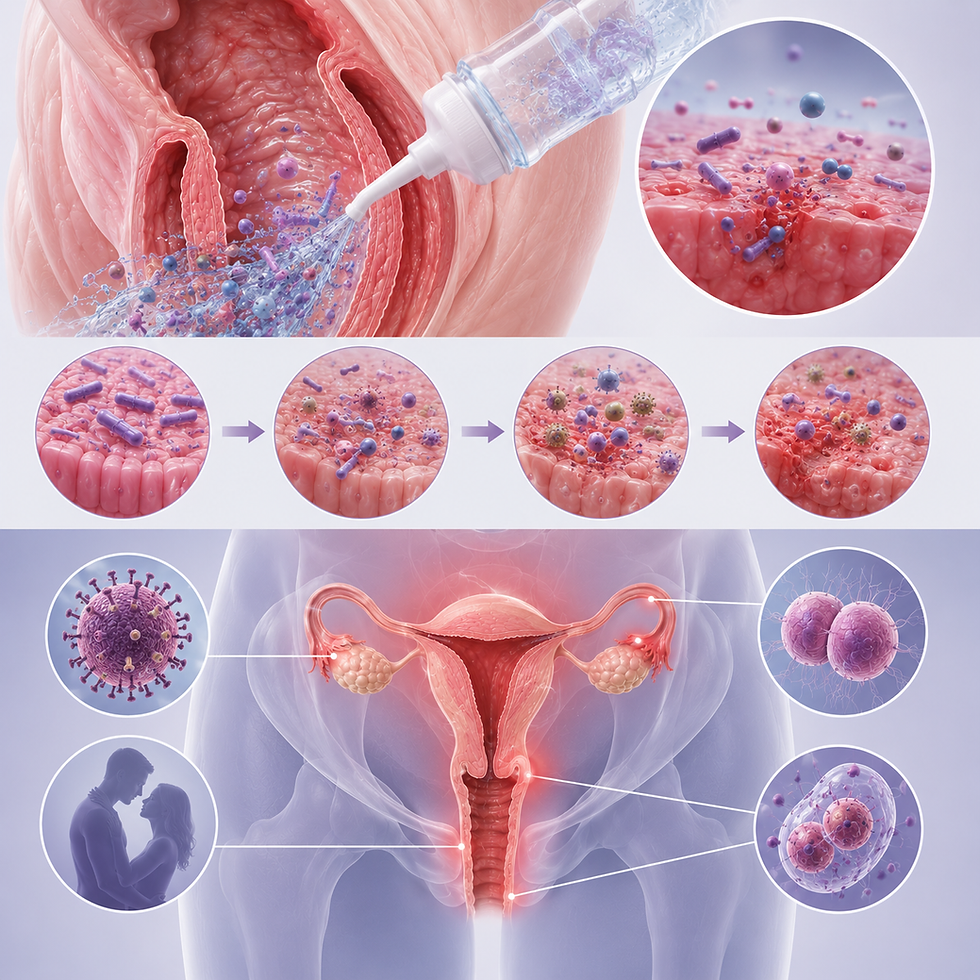
Sexually Transmitted Infections
The combination of microbiome disruption and tissue damage from douching has been linked to greater susceptibility to STIs, including HIV, gonorrhea, and chlamydia.

Fertility Challenges
Women who douche regularly have been shown in some studies to face greater challenges conceiving. The exact mechanisms aren't fully understood, but disrupted vaginal and uterine environments are thought to play a role.
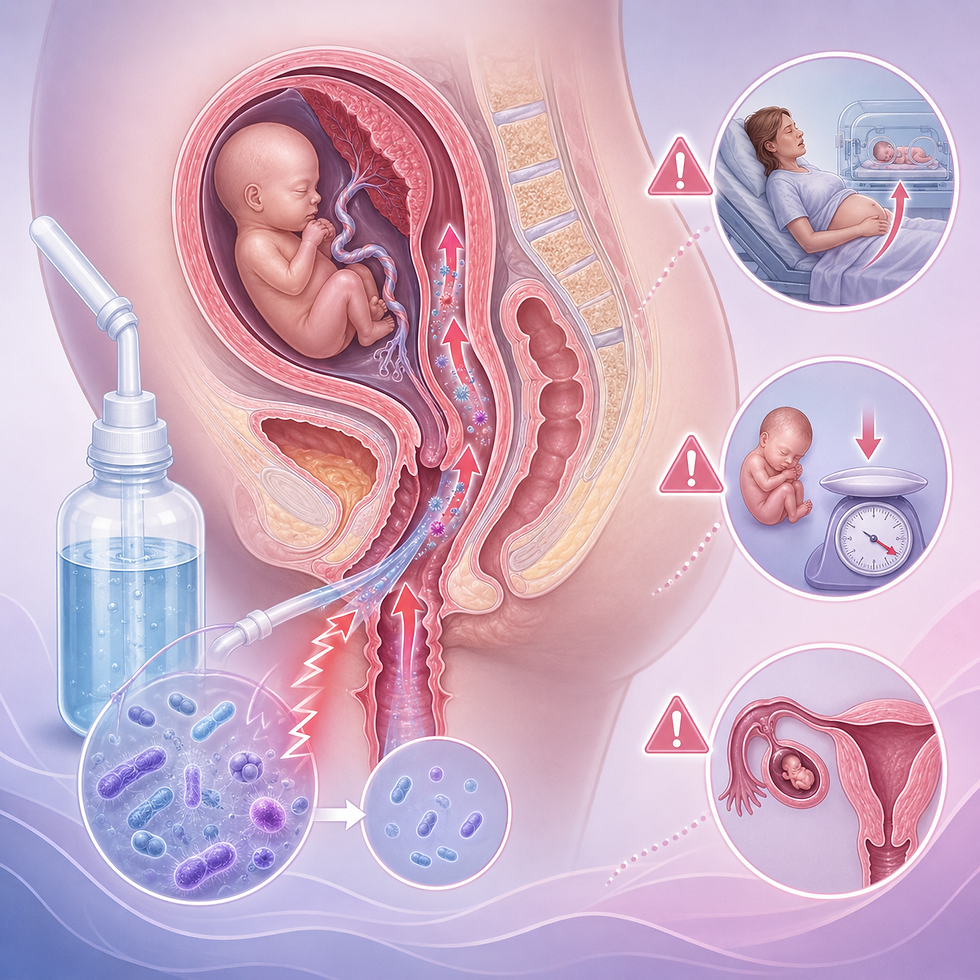
Pregnancy Complications
Douching during pregnancy has been associated with preterm birth, low birth weight, and ectopic pregnancy.

Cervical Health
Some studies have suggested associations between regular douching and certain cervical health concerns, although the evidence is more nuanced and continues to be investigated.
The pattern across all of this research is consistent. Douching doesn't help, and it often hurts.
The Marketing Myth: Why So Many Women Have Been Told to Douche
If douching is so harmful, why do so many women do it? The answer is largely historical and economic.
For most of the 20th century, douching products were heavily marketed to women as essential for "freshness," "cleanliness," and "femininity." Ads in magazines, on television, and in stores told women they needed these products to feel desirable, confident, and hygienic. Some campaigns explicitly told women that their natural state was unclean or unpleasant.
Many women learned about douching from their mothers or grandmothers, who learned it from theirs. It became woven into family routines, particularly in certain cultural and ethnic communities, and was reinforced by advertising for decades.
The medical establishment has been clear for many years that douching is harmful. But the marketing came first, and overcoming generations of habit and industry messaging takes time.
If you've been douching, the most important thing to know is that this isn't a personal failing or a sign that you don't care about your health. It's a pattern shaped by powerful messaging that doesn't reflect what your body actually needs.
What "Normal" Vaginal Scent Actually Is
One of the most common reasons women give for douching is concern about vaginal odor. Here's something important to know.
A normal, healthy vagina has a scent. It isn't supposed to smell like flowers, soap, or "nothing." It has its own subtle aroma that varies through the menstrual cycle, with sexual activity, with diet, and from one woman to another.
That natural scent isn't a problem. It's biology.
What's worth investigating is a change in scent, particularly toward unpleasant, fishy, foul, or strongly pungent odors. These changes often indicate that something is genuinely worth medical attention, such as:
Bacterial vaginosis (commonly produces a fishy odor)
Yeast infections (sometimes a yeasty or bread-like odor)
Trichomoniasis (sometimes a foul or unpleasant odor)
Retained foreign objects (such as a forgotten tampon)
Other infections or conditions
Trying to mask these changes with douching doesn't address the underlying issue and can actually make things worse. Seeking evaluation is the more effective path.

If you've been struggling with vaginal odor, recurrent UTIs, or vaginal symptoms that haven't responded to standard care, you don't have to keep navigating this alone. Visit Clinova Solutions to learn how clinician-led telehealth care can help you find real answers.
What to Do Instead: Safer Vaginal Care
Healthy vaginal care is simpler than the products industry has led many of us to believe.
Gentle External Cleansing
Use plain warm water to wash the vulva (the external area).
If you prefer a cleanser, choose a mild, fragrance-free option designed for sensitive skin, used only on the vulva.
Avoid harsh soaps, body washes, bubble baths, and anything with strong fragrances.
Avoid Cleaning Inside the Vagina
The vagina is self-cleaning. It produces natural secretions that maintain its environment without any need for washing inside. Trying to clean inside disrupts the very system designed to keep it healthy.
Choose Thoughtful Products
Skip scented pads, liners, sprays, wipes, and bath products.
Be cautious with new soaps, detergents, and fabric softeners that contact your underwear.
Reconsider products marketed as "feminine washes," "freshness sprays," and similar items.
Wear Breathable Underwear
Cotton underwear allows airflow and reduces moisture buildup. Change out of wet swimwear and damp workout clothes promptly.
Address Concerns With a Clinician
If something feels off, smells different, or doesn't seem right, that's not a reason to douche. It's a reason to seek evaluation. Vaginal symptoms are almost always treatable when the underlying cause is identified.
Support Your Microbiome
For women with recurrent vaginal or urinary issues, microbiome-aware care can include:
Targeted probiotic strategies under guidance
Avoiding unnecessary antibiotics when possible
Addressing hormonal factors that affect vaginal health
Treating any active BV, yeast, or AV with proper protocols
If You've Been Douching: It's Not Too Late
If you've been douching, regularly or occasionally, the good news is that the vagina has remarkable capacity to recover once disruption stops.
Most women who stop douching see their microbiome gradually restore itself over weeks to months. The protective Lactobacillus community can rebuild, vaginal pH can stabilize, and tissue can recover.
Steps that support this recovery:
Simply stop douching. This is the single most important step.
Switch to gentle external cleansing only, with plain water or mild fragrance-free cleansers.
Treat any active BV, yeast, or other vaginal conditions that may have developed.
Consider microbiome support, including discussing targeted probiotics with a knowledgeable provider.
Address hormonal factors if you're in perimenopause or menopause, where vaginal estrogen can dramatically support recovery.
Be patient. Microbiome recovery takes time. Improvement is often gradual.
Many women find that within several months of stopping, their UTI frequency decreases, vaginal symptoms improve, and their overall comfort returns.
Want a clear, easy-to-share resource you can keep or bring to your provider? Download our free Clinova UTI and bladder health guide.
Special Situations

After Your Period
Many women feel the urge to douche after menstruation. The vagina cleans itself naturally after a period. Gentle external cleansing with water is all that's needed. If you feel unusually unpleasant after periods, that may be a sign of an underlying issue worth evaluating, not a reason to douche.

After Sex
The vagina is also designed to handle sexual activity and recover on its own. Urinating after intercourse, gentle external cleansing, and good hydration are far more supportive than douching.

Cultural and Family Traditions
If douching is part of your family or cultural tradition, ending the practice can feel like rejecting something important about your community. That's a real emotional reality, not just a medical decision. Sharing what you've learned with the women in your life can be one way to honor those traditions while protecting their health.

Body Image and Confidence
If you've been douching to feel more desirable or confident, please know that healthy vaginal scent is not unpleasant or undesirable. The narratives that suggest otherwise come from industry, not biology. Confidence in your body doesn't require fundamentally changing it.
When to Seek Professional Support
Please reach out to a qualified clinician if you experience:
New or unusual vaginal discharge, odor, or irritation
Recurring BV, yeast infections, or UTIs
Pain with intimacy or urination
A sense that something isn't right
Concerns about vaginal odor that you've been trying to manage with douching
Recurrent vaginal or bladder symptoms that haven't responded to standard care
You should always seek prompt care for fever, severe pain, unusual bleeding, or symptoms during pregnancy.
How Clinova Solutions Can Help
Clinova Solutions specializes in caring for women with recurrent UTIs, chronic urinary symptoms, and the conditions that often surround them. We understand that vaginal and urinary health are deeply interconnected, and that good care looks at the whole picture, including the practices and products that affect microbiome balance.
Our approach is built around:
Clinician-led telehealth care so you can access expert support from home
Personalized plans based on your unique history, symptoms, and goals
An education-first philosophy that helps you truly understand your body and your options
Judgment-free conversations about every factor that may be contributing to your symptoms, including hygiene practices and product use
Specialized expertise in recurrent UTIs and the wider range of conditions that surround them
Prevention-focused strategies designed to support long-term comfort, microbiome balance, and confidence
You deserve care that connects the dots, listens carefully, and helps you build a plan that works for the long term.
To take a more informed next step, you can:
Download our free UTI and bladder health guide for a clear, practical resource you can keep and share.
Visit Clinova Solutions to learn more about our care model and how we support women through every stage of urinary and vaginal health.
Frequently Asked Questions
Does douching really cause UTIs?
It significantly raises the risk. Douching disrupts the protective vaginal microbiome, raises vaginal pH, can push bacteria toward the urethra, and damages natural defenses. The result is greater colonization by E. coli and other bacteria that cause UTIs.
Is occasional douching okay?
Even occasional douching disrupts the vaginal microbiome. The more frequent the practice, the greater the cumulative effect. Most major medical organizations recommend against any vaginal douching.
What's the difference between douching and washing my vulva?
Washing the vulva (the external area) gently with water or a mild cleanser is appropriate and not harmful. Douching involves rinsing inside the vagina, which is the harmful practice. The two are very different despite both being labeled as "hygiene."
My vagina has a smell. Isn't that a problem?
Not necessarily. Healthy vaginas have a natural scent that varies with cycle, activity, and individual biology. A normal, mild scent is biology, not a problem. A significant change to unpleasant, fishy, foul, or strongly pungent odor is worth investigating, but with medical evaluation, not douching.
What if my partner has commented on vaginal odor?
This is a delicate situation that's worth thinking through. Healthy vaginas have scent, and a partner's comments don't always reflect a medical issue. If there's been a clear change you've also noticed, evaluation is reasonable. If a partner is expressing dissatisfaction with healthy biology, that's a different conversation worth having.
Can douching help with vaginal infections?
No. Douching has not been shown to treat any vaginal infection effectively. In fact, douching often worsens infections by disrupting the microbiome further, masking symptoms that need evaluation, and pushing bacteria into upper reproductive structures.
Will my vaginal microbiome recover if I stop douching?
For most women, yes. The vagina has significant capacity to recover its protective microbiome once disruption stops. Recovery typically takes weeks to months, depending on individual factors. Active vaginal conditions may need treatment in the meantime.
What should I use to clean my vagina?
Nothing inside. The vagina is self-cleaning. For the vulva (the external area), plain warm water is sufficient, or a mild, fragrance-free cleanser if you prefer. Avoid soaps, body washes, bubble baths, and fragranced products in this area.
My family has always douched. Is it really that harmful?
The medical evidence is clear that douching increases the risk of UTIs, BV, PID, and other conditions. Family traditions are meaningful, but they don't always reflect what current medical evidence supports. You can honor traditions while protecting your health.
Are "feminine washes" and "freshness products" different from douching?
External feminine washes used on the vulva (not inserted into the vagina) are less directly harmful than douching, but many still contain fragrances or ingredients that can irritate sensitive tissue. Plain water or a mild, fragrance-free cleanser is generally safer than commercial "freshness" products.
Is this my fault for douching?
No. Most women who douche learned the practice from family or cultural traditions, marketing, or media messages that didn't reflect medical evidence. Having clearer information now simply gives you more options going forward.
When should I see a clinician?
Anytime you have vaginal symptoms that concern you, recurrent UTIs or vaginal infections, persistent discharge changes, or odor changes you've been trying to address through hygiene practices. Earlier evaluation often leads to faster, more effective treatment.
Follow Along for Ongoing Recurrent UTI Education & Support
Healing starts with understanding what's really going on in your body, and you should not have to figure it out alone.
We regularly share educational content about recurrent UTIs, bladder health, pelvic floor dysfunction, hormones, microbiome balance, prevention strategies, and evidence-informed approaches to chronic urinary symptoms across our social platforms.
Follow us for:
Recurrent UTI education
Prevention tips and symptom support
Bladder health insights
Expert-backed wellness content
New videos resources
Real conversations women are not hearing elsewhere
Facebook: Chronic UTI Care
Instagram: chronicuticare
YouTube: Chronic UTI
We’re here to help women feel informed, supported, and empowered through every stage of their healing journey.
This article is for educational purposes only and is not a substitute for individualized medical advice. Please consult a qualified clinician about your specific symptoms and health history.


Comments