Vaginitis: A Compassionate Guide to Common Types, Symptoms, and Care

Updated: Jun 19
Written and approved by Dr. Jasmine Bonder and Dr. Adam Bonder
When Every Diagnosis Feels Like a Guess
You've probably been here. You notice a change. Maybe it's discharge that looks different, or a faint itch, or a burning that comes and goes. You see a provider, you get a quick diagnosis, you take the treatment. A few weeks later, it's back. The next time it might be called something different. Then something different again.
If you've cycled through "yeast infection," then "BV," then "irritation," then "you'll just have to live with it," you're far from alone. And you're not imagining the confusion. Vaginitis is one of the most common and most misdiagnosed conditions affecting women, and it deserves a much clearer conversation than most women ever get.
This guide will walk you through what vaginitis actually is, the different types, how they show up, why they're often misidentified, and what evidence-informed care can look like. Our goal is to help you feel more informed, more validated, and more confident about the next conversation you have with your provider.

If you'd like a printable resource to keep at hand or bring to your next appointment, you can download our free Clinova UTI and bladder health guide here anytime. It pairs well with this article, especially if recurrent UTIs are part of your story too.

Vaginitis is a general term for inflammation or irritation of the vagina. It often involves the vulva as well, which is why you may also see it called vulvovaginitis.
It isn't one condition. It's a category. Several different underlying issues can produce a similar set of symptoms, which is part of why getting an accurate diagnosis can be so tricky. Common types of vaginitis include:
Bacterial vaginosis (BV)
Aerobic vaginitis (AV)
Vulvovaginal candidiasis (yeast infections)
Trichomoniasis
Atrophic vaginitis (linked to low estrogen)
Allergic or irritant contact vaginitis
Desquamative inflammatory vaginitis (DIV)
Mixed vaginitis (more than one type at the same time)
The symptoms of each can overlap, which is why women so often experience a frustrating cycle of treatments that work for a while and then stop working.
Why Vaginitis Is So Often Confusing
When women come in describing vaginal discomfort, the symptoms tend to sound similar at first. Itching, discharge, irritation, odor, discomfort with intimacy, mild burning. From the outside, those could mean almost anything.
That's why what feels like "another yeast infection" might actually be BV. Or aerobic vaginitis. Or atrophic vaginitis. Or an allergic reaction to a new soap. Or a mix of more than one issue happening at once. Each type has a different cause and responds to a different approach, which is why guessing rarely works long term.
If you've been told you "just keep getting yeast infections" or "another round of BV," it may be worth a closer look. Real, accurate diagnosis is the foundation of relief.
The Major Types of Vaginitis
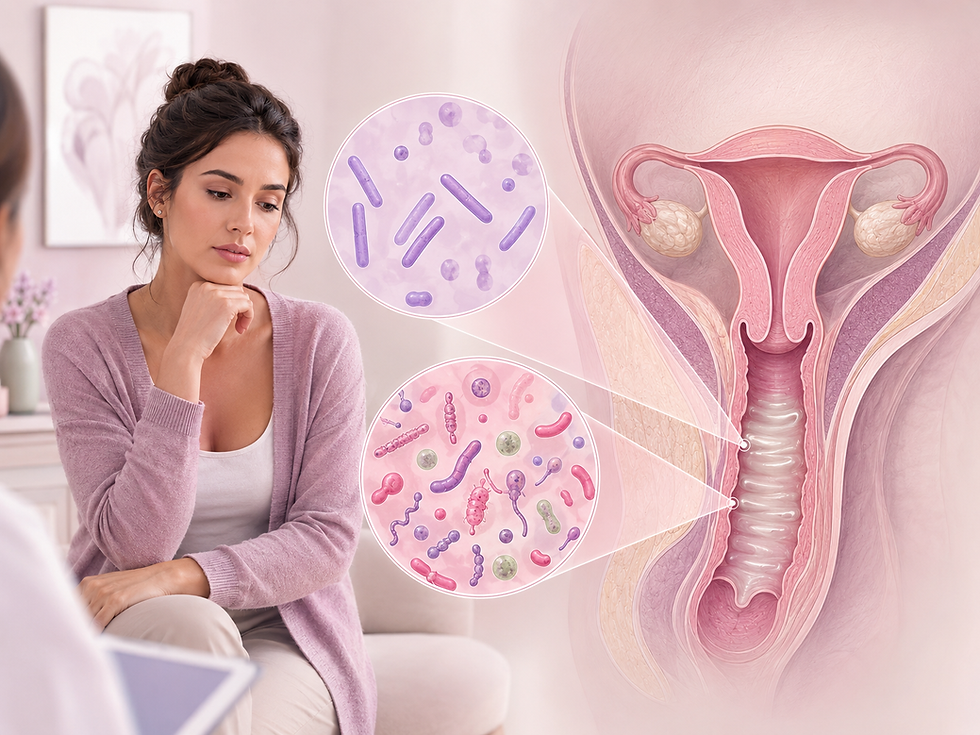
BV happens when the protective Lactobacillus bacteria in the vagina decline and a mixed group of anaerobic bacteria overgrows.
Common signs:
Thin, grayish-white discharge
A fishy odor, often stronger after sex
Mild irritation
Sometimes no symptoms at all
Note: BV is the most common form of vaginitis in women of reproductive age, and it's also one of the most likely to recur.
Aerobic Vaginitis (AV)
Aerobic vaginitis is a less widely recognized but increasingly studied form of vaginitis. Unlike BV, which involves anaerobic bacteria, AV is driven by an overgrowth of aerobic bacteria. The most common organisms include Group B Streptococcus, Escherichia coli (E. coli), Staphylococcus aureus, and Enterococcus faecalis. Many of these are also bacteria involved in urinary tract infections, which is part of why AV matters so much for women with recurrent UTI symptoms.
AV also tends to involve more visible inflammation than BV, which can make symptoms feel more intense.
Common signs:
Yellow or yellow-green discharge
Burning or stinging
Itching or irritation
Pain with intercourse
A sense of redness, soreness, or rawness
An elevated vaginal pH
Symptoms that don't respond to typical BV treatment
Note: AV is frequently mistaken for BV and treated with the same antibiotic, even though the two are caused by very different organisms and require different approaches. If you've been treated repeatedly for BV without lasting improvement, it's reasonable to ask your clinician about AV. Severe forms of AV may also overlap with desquamative inflammatory vaginitis (DIV), which is discussed below.
Vulvovaginal Candidiasis (Yeast Infections)

This is caused by overgrowth of Candida species, most often Candida albicans.
Common signs:
Thick, white, "cottage cheese" discharge
Intense itching
Burning, especially with urination or intercourse
Redness and swelling of the vulva
Note: Some women experience recurrent yeast infections caused by non-albicans strains, which often respond differently to standard treatment.
Trichomoniasis

Trichomoniasis is caused by a small parasite called Trichomonas vaginalis. It is a sexually transmitted infection.
Common signs:
Frothy, yellow-green discharge
Itching and irritation
Discomfort with urination or sex
Sometimes no symptoms at all
Note: Trichomoniasis is often missed by routine exams. Specific testing is important when symptoms aren't clearly explained by BV or yeast.
Atrophic Vaginitis

Atrophic vaginitis is a form of vaginal inflammation linked to low estrogen. It's part of a broader condition known as Genitourinary Syndrome of Menopause (GSM).
Common signs:
Dryness, even without sex
Burning, irritation, or rawness
Pain with intercourse
Light bleeding after sex
Urinary symptoms, including recurrent UTIs
Note: Atrophic vaginitis can affect women in perimenopause, menopause, postpartum, while breastfeeding, after cancer treatment, and on certain medications. It's a major underdiagnosed cause of recurrent vaginitis.
Allergic or Irritant Contact Vaginitis

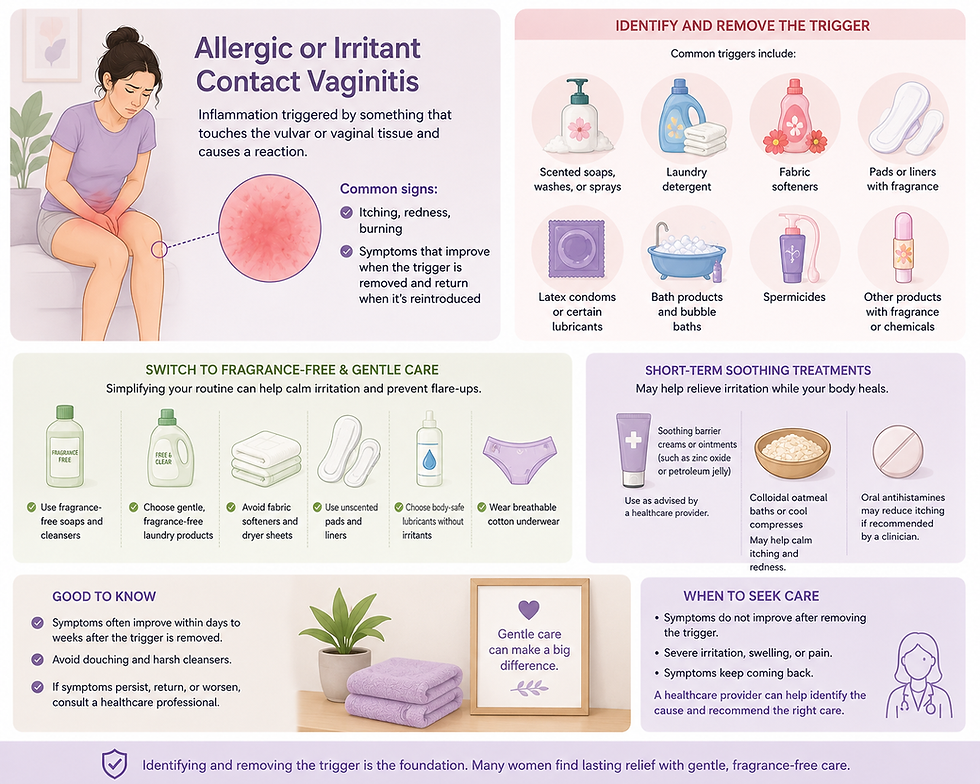
This is inflammation triggered by something that touches the vulvar or vaginal tissue and causes a reaction.
Common triggers:
Scented soaps, washes, or sprays
Laundry detergent
Fabric softeners
Pads or liners with fragrance
Latex condoms or certain lubricants
Bath products and bubble baths
Spermicides
Common signs:
Itching, redness, burning
Symptoms that improve when the trigger is removed and return when it's reintroduced
Desquamative Inflammatory Vaginitis (DIV)

DIV is a less commonly diagnosed but real inflammatory condition that doesn't fit the usual BV or yeast pattern.
Common signs:
Yellow or greenish discharge
Significant inflammation and tenderness
Painful intercourse
Often persistent or recurrent despite standard treatment
Note: DIV often requires specialized care. It is sometimes missed by routine testing.
Mixed Vaginitis
Sometimes women have more than one type at the same time. This is increasingly recognized and explains why many cases don't fully respond to a single treatment.
A Quick Comparison
Type | Discharge | Odor | Itching | pH Change | Common Triggers |
BV | Thin, grayish-white | Fishy, stronger after sex | Mild or none | Higher (above 4.5) | Antibiotics, hormonal shifts, sexual activity |
Yeast | Thick, white, "cottage cheese" | Usually none | Intense | Usually normal | Antibiotics, high blood sugar, hormonal shifts |
Trichomoniasis | Frothy, yellow-green | Sometimes unpleasant | Yes | Higher | Sexual transmission |
Atrophic | Often minimal or watery | Usually none | Possible, often dry | Higher | Low estrogen |
Allergic/Irritant | Often minimal | None typical | Often significant | Variable | Product or material exposure |
DIV | Yellow or greenish | Sometimes | Common | Often higher | Not fully understood |
This table is a starting point, not a substitute for evaluation. Real diagnosis depends on more than symptoms alone.
Why Vaginitis Is So Often Misdiagnosed
If you've been treated for one thing repeatedly without lasting improvement, this section will likely sound familiar. There are real reasons vaginitis is often misidentified.
Self-diagnosis is common. Many women treat themselves for yeast based on symptoms alone, but studies have shown that self-diagnosis is often wrong. The same symptoms can be caused by BV, atrophy, irritation, or mixed conditions.
Standard exams have limits. A quick exam and basic test may not capture everything that's going on, especially in mixed or atypical cases.
Short appointments make it harder. Vaginitis can be complex, and a brief visit rarely allows for the layered conversation it deserves.
Newer tests aren't always used. Molecular testing can identify a broader range of causes, but it isn't always part of routine care.
Hormonal causes are often missed. Atrophic vaginitis is commonly overlooked in women who don't realize their symptoms are linked to estrogen.
Sexual health stigma still exists. It can make honest conversations harder, even though they're essential for accurate care.
None of this is your fault. It reflects gaps in a system that is slowly improving.

If your vaginal symptoms keep returning or never quite go away, you don't have to keep navigating this alone. Visit Clinova Solutions to learn how clinician-led telehealth care can help you understand what's really going on.
For Clinova's community, this section matters deeply. Vaginitis and recurrent UTIs are far more connected than most women are told.
The vagina and the urinary tract share more than just geography. They share a microbiome influence, hormonal sensitivity, and overlapping tissue health. When the vaginal environment is inflamed or imbalanced, the urinary tract is often affected too. That's why so many women with recurrent BV or yeast also experience:
Recurrent UTIs
Urinary urgency or frequency
Mild bladder irritation that comes and goes
Burning with urination even when cultures are negative
Treating vaginal health is often one of the most important steps in supporting bladder health. They aren't separate stories. They're chapters of the same one.
How Vaginitis Is Diagnosed
Accurate diagnosis usually involves more than just a quick look. A comprehensive evaluation can include:
A thorough symptom history, including patterns, timing, products used, sexual activity, hormonal status, and prior treatments
A focused exam of the vulvar and vaginal tissue
Vaginal pH testing, which often shifts in BV, trichomoniasis, atrophy, and DIV
Microscopy to look for clue cells, yeast, parasites, or inflammation
NAAT (nucleic acid amplification) testing, which can identify trichomoniasis, BV-associated organisms, and yeast more accurately than older methods
Cultures when needed
Hormonal evaluation when atrophic vaginitis is suspected
Allergy or irritant review when contact vaginitis is suspected
If your previous diagnoses haven't matched your experience, asking about more thorough testing is a reasonable next step.
Treatment Options by Type
Treatment for vaginitis should match the actual cause. Here's an overview of how each type is typically approached. Your individual plan should always be guided by a qualified clinician.

Bacterial Vaginosis
Oral or vaginal antibiotics, such as metronidazole or clindamycin
For recurrent cases, maintenance protocols and microbiome support may be helpful
Newer approaches include targeted probiotic strategies and addressing underlying contributors
Yeast Infections
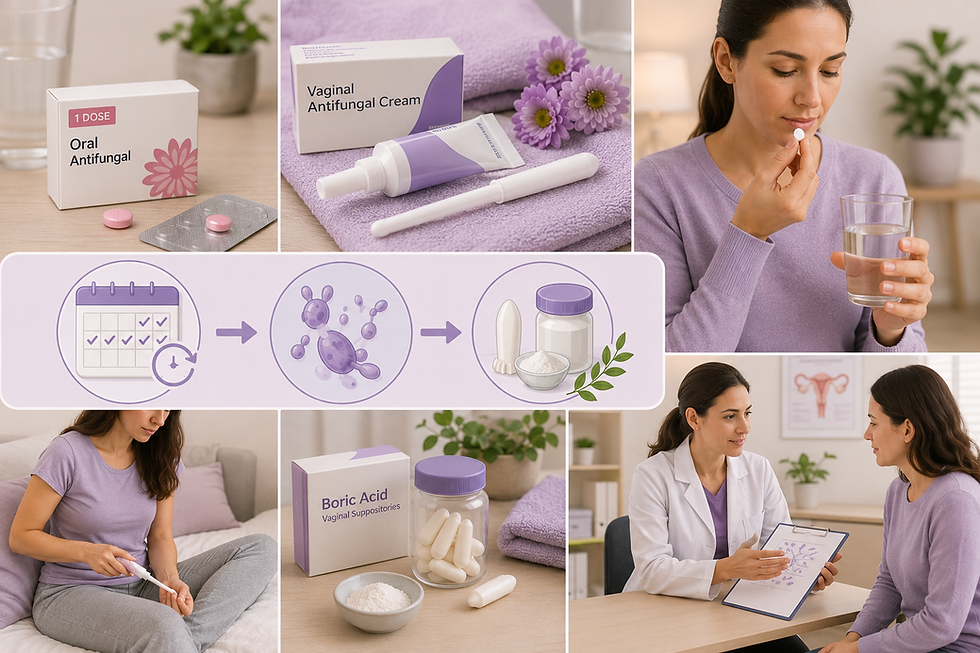
Antifungal medication, either oral (such as fluconazole) or vaginal (such as miconazole or clotrimazole)
For recurrent cases, longer or repeated courses may be considered
Non-albicans yeast may require different antifungals, sometimes with boric acid suppositories under clinician guidance

Trichomoniasis
Oral antiprotozoal medication, usually metronidazole or tinidazole
Partner treatment is essential to prevent reinfection

Atrophic Vaginitis
Vaginal estrogen, available as creams, tablets, or rings, is one of the most effective options for many women
Vaginal DHEA or ospemifene are additional options
Moisturizers and lubricants offer supportive comfort
Addressing atrophic vaginitis can dramatically reduce recurrent UTI risk
Allergic or Irritant Contact Vaginitis
Identifying and removing the trigger is the foundation
Switching to fragrance-free products and gentle care can resolve symptoms in many cases
Short-term soothing treatments may be appropriate

Desquamative Inflammatory Vaginitis (DIV)
Often requires specialized vaginal anti-inflammatory or hormonal treatments
May involve longer-term maintenance care
A clinician experienced with DIV is often key to lasting improvement

Mixed Vaginitis
Treatment usually addresses each component thoughtfully, often in sequence or in combination
This approach can require more time, more layered care, and more follow-up than a single diagnosis
Want a clear, easy-to-share resource that helps you organize symptoms and questions for your provider? Download our free Clinova UTI and bladder health guide. It pairs well with comprehensive vaginal health care.
Why Recurrent Vaginitis Happens
If your vaginitis keeps coming back, it isn't a personal failing. Several patterns commonly drive recurrence.
The diagnosis was incomplete. Treating one component while another goes unaddressed often leads to return symptoms.
The underlying microbiome isn't being supported. Antibiotics or antifungals can clear acute issues without restoring balance.
Hormonal factors are unaddressed. Atrophic changes during perimenopause and menopause are often overlooked.
Triggers haven't been identified. Repeated exposure to an irritating product or fabric can keep symptoms cycling.
Sexual factors haven't been considered. Some recurring patterns improve when sexual practices, lubrication, partner treatment, or timing are part of the conversation.
Stress and lifestyle remain unaddressed. These don't cause vaginitis on their own, but they affect resilience.
Recurrent vaginitis usually responds best to a more layered approach, not to repeating the same single treatment.
Practical Daily Tips
These gentle habits can support a healthier vaginal environment alongside any medical care.
Skip douching. The vagina cleans itself, and douching can disrupt the microbiome.
Clean the vulva gently. Use plain water or a mild, fragrance-free cleanser. Avoid soaps, washes, and wipes that promise to "freshen."
Avoid scented products. Pads, liners, sprays, bath products, and laundry detergent with strong fragrances can all be triggers.
Wear breathable cotton underwear. Change out of wet swimwear and damp workout clothes promptly.
Be thoughtful about lubricants. Choose options without irritating additives.
Stay hydrated.
Support your gut. A balanced diet supports overall microbiome health.
Manage stress. Your nervous system, immune system, and microbiome are deeply connected.
Pay attention to patterns. Recurring symptoms are information worth taking seriously.
When to Seek Professional Support
Please reach out to a qualified clinician if you experience:
New or unusual discharge, odor, or irritation
Symptoms that don't improve with standard treatment
Symptoms that improve briefly and then return
Pain with intercourse or urination
Recurrent vaginitis, recurrent UTIs, or both
Bleeding between periods or after intercourse
Symptoms during pregnancy
A sense that your concerns aren't being fully addressed
You should always seek prompt care for fever, severe pain, or significant bleeding.
You also deserve more thorough evaluation if you've been treated for the same condition repeatedly without lasting improvement. Vaginitis is too complex for one-size-fits-all care.
How Clinova Solutions Can Help
Clinova Solutions was created for women who have experienced exactly this kind of confusion. Women who have been told different things at different visits. Women whose symptoms keep returning. Women whose recurrent UTIs are quietly tied to vaginal health imbalance. Women who simply want a knowledgeable, compassionate provider who treats them as a whole person.
Our approach is built around:
Clinician-led telehealth care so you can access expert support from home
Personalized plans based on your unique history, hormones, and symptom patterns
An education-first philosophy that helps you truly understand your body
Specialized focus on recurrent UTIs, chronic urinary symptoms, and related vaginal conditions
Prevention-focused strategies designed to support long-term comfort, not just immediate treatment
You deserve care that connects the dots, listens carefully, and helps you build a plan that works for the long term.
To take a more informed next step, you can:
Download our free UTI and bladder health guide for a clear, practical resource you can keep and share.
Visit Clinova Solutions to learn more about our care model and how we support women through every stage of urinary and vaginal health.
Frequently Asked Questions
What is vaginitis?
Vaginitis is a general term for inflammation or irritation of the vagina, often including the vulva. It isn't a single condition. It refers to several different underlying issues that can produce similar symptoms, including BV, yeast infections, trichomoniasis, atrophic vaginitis, allergic vaginitis, DIV, and mixed cases.
How do I know what type of vaginitis I have?
Symptoms alone often aren't enough. Many types of vaginitis look similar at first. A proper evaluation by a qualified clinician, sometimes including pH testing, microscopy, or molecular testing, gives you the clearest picture.
Is vaginitis the same as BV or a yeast infection?
BV and yeast infections are two of the most common types of vaginitis, but they aren't the only ones. Treating every flare as "another yeast infection" can miss important diagnoses, especially when symptoms keep returning.
Can vaginitis cause UTIs?
It can contribute to them. Vaginal health and urinary health are closely linked, especially through the microbiome and through hormonal influences. Women with recurrent vaginitis often experience recurrent UTIs as well.
Why do my symptoms keep coming back?
Recurrence usually means something underlying hasn't been fully addressed. It could be an unrecognized cause, a missed type of vaginitis, hormonal factors, an ongoing trigger, or microbiome imbalance. Repeated single treatments rarely solve recurrent vaginitis on their own.
Can I treat vaginitis at home?
Over-the-counter antifungals can help with confirmed yeast infections, but self-diagnosis is often wrong. If you have ongoing or recurring symptoms, it's worth getting properly evaluated rather than continuing to treat blindly.
Can hormonal changes cause vaginitis?
Yes. Low estrogen, especially in perimenopause, menopause, postpartum, while breastfeeding, or after certain treatments, can cause atrophic vaginitis. It's a frequently overlooked cause of recurrent vaginal symptoms.
Is vaginitis my fault?
No. Vaginitis reflects a combination of biology, hormones, microbiome, environmental exposures, and individual susceptibility. It's not a hygiene or moral issue, and you deserve compassionate, informed care without judgment.
Can vaginitis be sexually transmitted?
Some types, like trichomoniasis, are sexually transmitted. Others, like yeast infections and BV, are not classified as STIs but can be influenced by sexual activity. Honest, judgment-free conversations with your provider are important for accurate care.
When should I see a clinician?
Anytime your symptoms are persistent, recurrent, severe, or affecting your comfort, intimacy, or bladder health. You don't need to wait until things feel unbearable. Earlier care often leads to easier, more effective treatment.
Follow Along for Ongoing Recurrent UTI Education & Support
Healing starts with understanding what's really going on in your body, and you should not have to figure it out alone.
We regularly share educational content about recurrent UTIs, bladder health, pelvic floor dysfunction, hormones, microbiome balance, prevention strategies, and evidence-informed approaches to chronic urinary symptoms across our social platforms.
Follow us for:
Recurrent UTI education
Prevention tips and symptom support
Bladder health insights
Expert-backed wellness content
New videos resources
Real conversations women are not hearing elsewhere
Facebook: Chronic UTI Care
Instagram: chronicuticare
YouTube: Chronic UTI
We’re here to help women feel informed, supported, and empowered through every stage of their healing journey.
This article is for educational purposes only and is not a substitute for individualized medical advice. Please consult a qualified clinician about your specific symptoms and health history.


Comments