Yeast Infections in Women: Causes, Symptoms, and Why They Keep Coming Back

Updated: Jun 19
Written and approved by Dr. Jasmine Bonder and Dr. Adam Bonder
That Familiar, Frustrating Itch
You know the feeling. The deep itch that won't quit. The discomfort that makes you squirm through meetings and avoid certain underwear. The thick, white discharge. Maybe you ran to the pharmacy and grabbed an over-the-counter treatment, hoping it would all be over in a few days. Maybe it was. Or maybe a few weeks later, it came right back.
If you're caught in a cycle of yeast infections that just keep returning, or if you've been told repeatedly that "it's just a yeast infection" without anyone explaining why your body keeps getting them, you're not alone. And you deserve better answers.
Yeast infections are one of the most common reasons women seek vaginal care, yet they remain widely misunderstood. The symptoms can be confused with other conditions. The standard treatment doesn't always work. And for women who experience them again and again, the cycle can feel exhausting and isolating.
This guide will walk you through what yeast infections actually are, why some women get them more often than others, how they connect to recurrent UTIs and antibiotic use, and what evidence-informed options can help you find lasting relief.

If you'd like a printable resource to bring to your next appointment, you can download our free Clinova UTI and bladder health guide here anytime. It pairs well with this article, especially if recurrent UTIs are part of your story.
If you’d like extra support before your next appointment, download the free Clinova guide: Negative Urine Cultures: Patient Education for Recurrent Urinary Tract Infections. It’s a printable, easy-to-read resource designed to help you better understand negative urine cultures, recurrent UTI symptoms, and the questions you may want to bring up with your clinician.
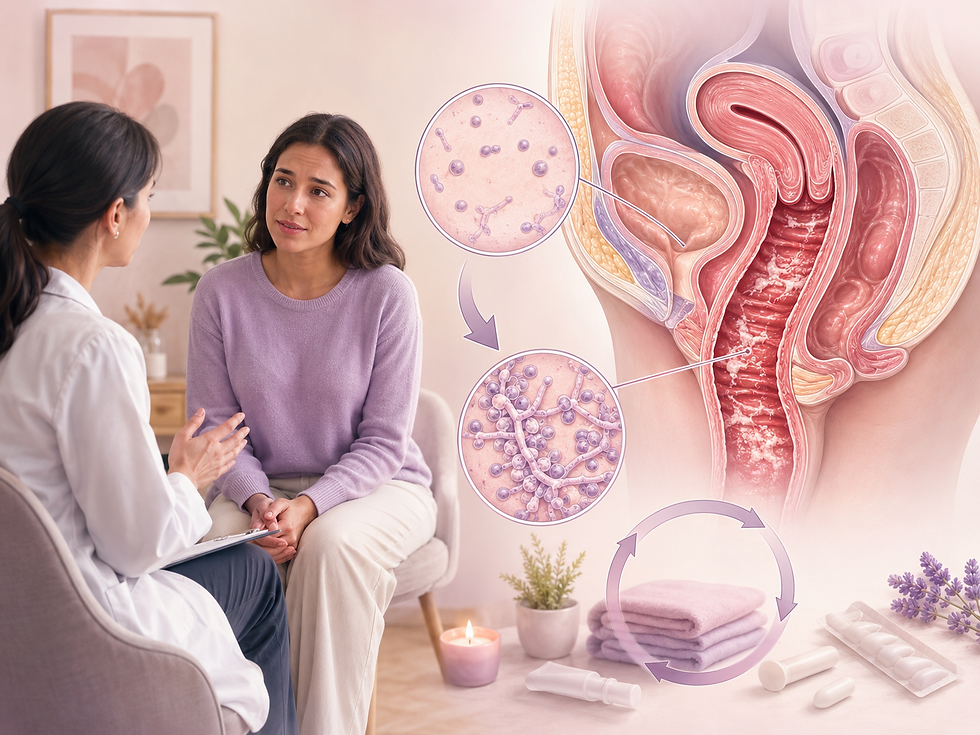
A vaginal yeast infection, medically known as vulvovaginal candidiasis, happens when a type of fungus called Candida overgrows in the vagina and surrounding tissues.
Here's something many women don't realize. Candida is a normal part of the vaginal microbiome. Small amounts live there without causing problems. A yeast infection isn't about Candida showing up where it doesn't belong. It's about Candida overgrowing past the point your body can comfortably manage.
About 75 percent of women will experience at least one yeast infection in their lifetime, and many will experience more than one. For some women, the issue becomes chronic, with four or more episodes per year. This is called recurrent vulvovaginal candidiasis (RVVC), and it deserves a more thoughtful approach than simply repeating the same treatment.
Common Symptoms of a Yeast Infection
Yeast infection symptoms can vary, but the most recognizable signs include:
Intense itching of the vagina and vulva
Thick, white discharge, often described as "cottage cheese" in texture, usually without strong odor
Burning, especially with urination or intercourse
Redness, swelling, or irritation of the vulva
Small cracks or fissures in the vulvar skin in some cases
Soreness or rawness, particularly during or after sex
Discomfort with tight clothing or sitting
Symptoms can range from mild and easily missed to intense enough to affect sleep, work, and intimacy. They can also come on quickly or build gradually.
If your symptoms include strong odor, fishy smell, frothy discharge, or pain with urination that feels deeper in the bladder, you may be dealing with a different condition (more on that below).
Yeast Infections vs. BV vs. UTIs: A Quick Distinction
Because women's bodies don't always read the textbook, symptoms can overlap significantly. Here's a simple way to think about the differences.
Feature | Yeast Infection | Bacterial Vaginosis (BV) | UTI |
Itching | Intense | Mild or none | Usually none |
Discharge | Thick, white, cottage cheese | Thin, grayish-white | Usually none |
Odor | Usually none | Fishy, stronger after sex | Sometimes strong urine odor |
Burning with urination | Sometimes (external) | Usually none | Yes (internal, burning sensation) |
Pain location | Vulva and vaginal opening | Inside vagina | Lower abdomen, bladder |
pH | Usually normal | Higher than normal | Not vaginal-related |
This table is a starting point, not a substitute for evaluation. Research has consistently shown that self-diagnosis of yeast infections is often wrong, especially for women who haven't been formally diagnosed before. Getting a proper evaluation, particularly for recurring symptoms, is one of the most useful steps you can take.
What Causes Yeast Infections?
Yeast infections aren't caused by anything you're doing wrong. They happen when the normal balance of microorganisms in the vagina shifts in a way that allows Candida to overgrow. Several factors can contribute.
Antibiotic Use

This is one of the most common causes, and a critical one for Clinova's community. Antibiotics can reduce the protective Lactobacillus bacteria in the vagina, opening the door for yeast to grow. This is why so many women develop a yeast infection right after treating a UTI.
Hormonal Changes

Estrogen affects the vaginal environment. Higher estrogen states (such as pregnancy, certain hormonal contraceptives, or premenstrual hormonal shifts) can make yeast overgrowth more likely. Conversely, lower estrogen during perimenopause and menopause can change the microbiome in different ways and contribute to other forms of vaginal irritation.

Blood Sugar and Diabetes
Higher blood sugar levels can encourage yeast growth. Women with poorly controlled diabetes or prediabetes may experience more frequent yeast infections.

Immune System Changes
Anything that affects immune function, including illness, medications, or chronic stress, can increase susceptibility.

Warm, Damp Environments
Yeast thrives in moisture. Sitting in wet swimwear, damp workout clothes, or tight, non-breathable fabrics for long periods can create conditions that allow yeast to overgrow.

Sexual Activity
Yeast infections aren't classified as sexually transmitted infections, but sexual activity can sometimes contribute, particularly with new partners or after periods of less activity. Friction, lubrication products, and other factors may play a role.

Douching and Harsh Products
Douches, fragranced washes, and scented hygiene products can disrupt the vaginal microbiome and make yeast overgrowth more likely.

Genetics
Some women appear to be naturally more prone to yeast infections, which can reflect genetic differences in immune response. This is biology, not failure.
Who's More Likely to Get Yeast Infections?
You may be more likely to experience yeast infections if you:
Have recently taken antibiotics
Are pregnant or recently postpartum
Have diabetes or insulin resistance
Use certain hormonal contraceptives
Have a weakened immune system
Are on medications like corticosteroids
Frequently wear tight, non-breathable clothing
Have had previous yeast infections (recurrence is common)
Are experiencing significant stress or major life changes
If any of these apply to you, it doesn't mean a yeast infection is inevitable. It just means your body may benefit from more attention to supporting balance.
When Yeast Infections Keep Coming Back: Recurrent Vulvovaginal Candidiasis
For some women, yeast infections aren't an occasional inconvenience. They're a recurring pattern that disrupts daily life. Recurrent vulvovaginal candidiasis (RVVC) is defined as four or more episodes in a 12-month period.
RVVC affects an estimated 5 to 9 percent of women, but the real number is likely higher, because many women never receive a clear diagnosis. If this is your experience, please know:
You aren't being dramatic.
You aren't doing something wrong.
You aren't simply unlucky.
You deserve a more comprehensive plan than another single course of treatment.
Recurrent yeast infections often involve factors that single-course treatment doesn't address, including microbiome imbalance, hormonal influences, immune patterns, and sometimes non-albicans yeast strains that don't respond to standard medications.
Non-Albicans Yeast: When Standard Treatment Stops Working
Most yeast infections (about 80 to 90 percent) are caused by Candida albicans, which usually responds well to common antifungal medications like fluconazole, miconazole, and clotrimazole.
But not all yeast is the same. Non-albicans species, including Candida glabrata, Candida krusei, and Candida parapsilosis, can cause symptoms that look identical to a typical yeast infection but resist standard treatment. These species are more common in women with recurrent yeast infections, and they often require different antifungal approaches, sometimes including boric acid suppositories under clinician guidance.
If your yeast infections aren't fully clearing with standard treatment, or if they keep returning despite repeated antifungals, asking about culture or molecular testing for non-albicans species may help.
The Antibiotic, Yeast, and UTI Cycle
For many women in Clinova's community, the pattern looks like this:
A UTI develops.
Antibiotics are prescribed.
The UTI clears, but the antibiotics disrupt the vaginal microbiome.
A yeast infection follows.
An antifungal clears the yeast.
The microbiome is still disrupted.
Another UTI follows. Or another yeast infection. Sometimes both.
This isn't a coincidence. It's a predictable consequence of how antibiotics affect the body's protective bacteria. Recognizing this cycle is the first step toward breaking it.
Addressing recurrent UTIs and recurrent yeast infections together, with attention to microbiome health, is one of the most underutilized strategies in women's health.

If you've been cycling between UTIs and yeast infections, you don't have to keep navigating this alone. Visit Clinova Solutions to learn how clinician-led telehealth care can help you understand what's happening and break the cycle.
Why Self-Diagnosis Often Isn't Enough
When yeast infection symptoms appear, many women head straight to the pharmacy for an over-the-counter treatment. That's understandable. It feels familiar, fast, and private.
Here's the catch. Research has shown that when women self-diagnose yeast infections, they're often wrong. One well-known study found that only about a third of self-diagnoses were accurate. Symptoms that feel like yeast can actually be BV, atrophic vaginitis, irritant contact reactions, or even mixed conditions.
Using antifungal treatments for something that isn't yeast can:
Delay the correct diagnosis
Cause more irritation
Contribute to medication resistance over time
Lead to repeated unnecessary cycles
For occasional, classic yeast infections in women who have been diagnosed before, OTC treatment is often reasonable. For recurring symptoms or unclear patterns, a proper evaluation is far more likely to lead to lasting relief.
How Yeast Infections Are Diagnosed
A thoughtful evaluation may include:
A thorough symptom history, including timing, triggers, and prior treatments
A focused exam of the vulvar and vaginal tissue
Microscopy, looking for the characteristic appearance of yeast under a microscope
Vaginal pH testing, which is typically normal in yeast infections (a higher pH suggests something else)
Culture or molecular testing, particularly for recurrent cases or when standard treatment hasn't worked
Screening for contributing factors, including blood sugar, hormonal status, and medication history
If you've been treated repeatedly for "yeast" without lasting improvement, this kind of comprehensive evaluation can be life-changing.
Treatment Options for Yeast Infections
Treatment depends on the type of yeast, the severity, whether it's a first episode or recurrent, and your individual health factors. Your specific plan should always be guided by a qualified clinician.
Over-the-Counter Antifungals

For uncomplicated yeast infections in women who have been previously diagnosed:
Miconazole (Monistat)
Clotrimazole
Tioconazole
These come in 1-day, 3-day, or 7-day formulations. The longer regimens are often gentler and may work better for some women.
Prescription Antifungals

Oral fluconazole is commonly prescribed as a single dose for uncomplicated cases. For more significant or recurrent infections, longer or repeated dosing may be used.
Topical terconazole is another option.
Nystatin may be considered in specific situations.
Boric Acid Suppositories

For non-albicans yeast and some cases of recurrent yeast, boric acid suppositories used vaginally can be effective. This treatment is only for vaginal use under clinician guidance and is never safe to take orally. It's an important tool, but it requires proper supervision.
Maintenance Therapy

For recurrent yeast infections (RVVC), maintenance regimens, often weekly fluconazole over several months, can significantly reduce recurrence. This is typically combined with addressing underlying contributors rather than used as a standalone strategy.
Treating the Bigger Picture
For lasting improvement, the most effective approach usually combines targeted antifungal treatment with:

Supporting microbiome health
Addressing hormonal factors
Reviewing blood sugar control if relevant
Identifying and reducing trigger exposures
Stress and lifestyle support
A single antifungal alone often isn't enough when the underlying conditions remain.
Want a clear, practical resource you can keep and share with your provider? Download our free Clinova UTI and bladder health guide. It pairs well with comprehensive care for recurrent vaginal and bladder issues.
Practical Daily Tips
Gentle habits can help support a healthier vaginal environment alongside any medical care.
Skip douching. The vagina is self-cleaning, and douching disrupts the microbiome.
Use plain water or a gentle, fragrance-free cleanser on the vulva.
Avoid scented products, including washes, sprays, scented pads, scented liners, and bath products.
Wear breathable cotton underwear.
Change out of wet swimwear and damp workout clothes promptly.
Avoid tight, non-breathable clothing for long periods.
Be thoughtful about lubricants and condoms. Some women find certain ingredients irritating.
Manage blood sugar if it's an issue for you.
Support your gut health through balanced nutrition.
Use probiotics thoughtfully. Some strains, particularly certain Lactobacillus species, may help support vaginal health. Quality varies, so guidance helps.
Manage stress. It influences immune resilience.
Be cautious with antibiotics. Use them when truly needed, and ask about supporting the microbiome alongside any necessary course.
When to Seek Professional Support
Please reach out to a qualified clinician if you experience:
A first-ever suspected yeast infection (to confirm the diagnosis)
Symptoms that don't improve with standard treatment
Symptoms that return shortly after treatment
Four or more yeast infections in a year
Severe symptoms with swelling, fissures, or significant pain
Yeast infection symptoms during pregnancy
Yeast infections alongside recurrent UTIs
A sense that your concerns aren't being fully addressed
You should always seek prompt care for fever, severe pain, unusual bleeding, or rapidly worsening symptoms.
You also deserve more thorough care if you've been treating the same condition repeatedly without lasting improvement. Recurrent yeast infections are a real medical issue worth investigating, not a personal failure to manage.
How Clinova Solutions Can Help
Clinova Solutions was created for women navigating exactly these kinds of recurring, overlapping issues. Women whose yeast infections keep returning. Women caught in the antibiotic-yeast-UTI cycle. Women whose providers have moved too quickly to investigate the bigger picture. Women who simply want a knowledgeable, compassionate provider who treats them as a whole person.
Our approach is built around:
Clinician-led telehealth care so you can access expert support from home
Personalized plans based on your unique history, hormones, and patterns
An education-first philosophy that helps you truly understand your body
Specialized focus on recurrent UTIs, chronic urinary symptoms, and related vaginal conditions like recurrent yeast infections
Prevention-focused strategies designed to support long-term balance, not just immediate treatment
You deserve care that connects the dots, listens carefully, and helps you build a plan that lasts.
To take a more informed next step, you can:
Download our free UTI and bladder health guide for a clear, practical resource you can keep and share.
Visit Clinova Solutions to learn more about our care model and how we support women through every stage of urinary and vaginal health.
Frequently Asked Questions
What is a yeast infection?
A yeast infection is an overgrowth of Candida fungus in the vagina and surrounding tissues. It's medically known as vulvovaginal candidiasis. Most are caused by Candida albicans, but other species can also be responsible.
How do I know if it's a yeast infection or BV?
The symptoms can overlap, but classic yeast infections involve intense itching and thick, white, cottage-cheese-like discharge without strong odor. BV typically involves thin grayish discharge with a fishy odor. When in doubt, getting evaluated is the most reliable way to know.
Can a yeast infection cause UTI symptoms?
Yeast infections themselves don't cause UTIs, but external burning during urination can feel similar. Yeast infections also often follow antibiotic use for UTIs, creating a cycle where the two conditions keep alternating.
Why do I keep getting yeast infections after antibiotics?
Antibiotics reduce the protective Lactobacillus bacteria in the vagina, which gives Candida room to overgrow. This is one of the most common reasons women develop yeast infections after UTI treatment.
What is recurrent vulvovaginal candidiasis?
Recurrent vulvovaginal candidiasis (RVVC) is defined as four or more yeast infections in 12 months. It affects an estimated 5 to 9 percent of women and usually requires a more comprehensive treatment approach than a single antifungal course.
Can yeast infections be sexually transmitted?
Yeast infections aren't classified as sexually transmitted infections, but sexual activity can sometimes contribute. Partners don't typically need treatment unless they have symptoms.
Is boric acid safe to use?
Boric acid vaginal suppositories can be helpful for certain types of recurrent yeast and some other vaginal conditions when used under clinician guidance. It is only for vaginal use and is never safe to take orally. Always use under appropriate supervision.
Can hormonal changes cause yeast infections?
Yes. Higher estrogen states (such as pregnancy or certain hormonal contraceptives) can make yeast overgrowth more likely. Hormonal fluctuations across the menstrual cycle can also influence symptoms.
Does diet affect yeast infections?
Diet alone usually doesn't cause or cure yeast infections. However, blood sugar control matters, especially for women with diabetes or insulin resistance. Beyond that, supporting overall health and gut microbiome balance can help.
Should I take probiotics for yeast infections?
Targeted probiotic strategies may help some women, particularly those with recurrent yeast or BV. Not all probiotics are created equal, so guidance on strain selection and quality is valuable.
Is a yeast infection my fault?
No. Yeast infections reflect biology, hormones, microbiome, immune function, and many other factors. They aren't a hygiene issue or a moral one, and you deserve compassionate, informed care.
When should I see a clinician?
Anytime your symptoms are persistent, recurrent, severe, or unclear. You should especially seek care if it's your first suspected yeast infection, if standard treatment isn't working, or if you're experiencing four or more episodes a year.
Follow Along for Ongoing Recurrent UTI Education & Support
Healing starts with understanding what's really going on in your body, and you should not have to figure it out alone.
We regularly share educational content about recurrent UTIs, bladder health, pelvic floor dysfunction, hormones, microbiome balance, prevention strategies, and evidence-informed approaches to chronic urinary symptoms across our social platforms.
Follow us for:
Recurrent UTI education
Prevention tips and symptom support
Bladder health insights
Expert-backed wellness content
New videos resources
Real conversations women are not hearing elsewhere
Facebook: Chronic UTI Care
Instagram: chronicuticare
YouTube: Chronic UTI
We’re here to help women feel informed, supported, and empowered through every stage of their healing journey.
This article is for educational purposes only and is not a substitute for individualized medical advice. Please consult a qualified clinician about your specific symptoms and health history.


Comments